As artificial intelligence moves from the cloud to connected devices, more companies are developing edge AI products that can process data locally. For industrial vision, robotics, smart retail, transportation, and intelligent terminals, an AI box can analyze data close to where it is generated.
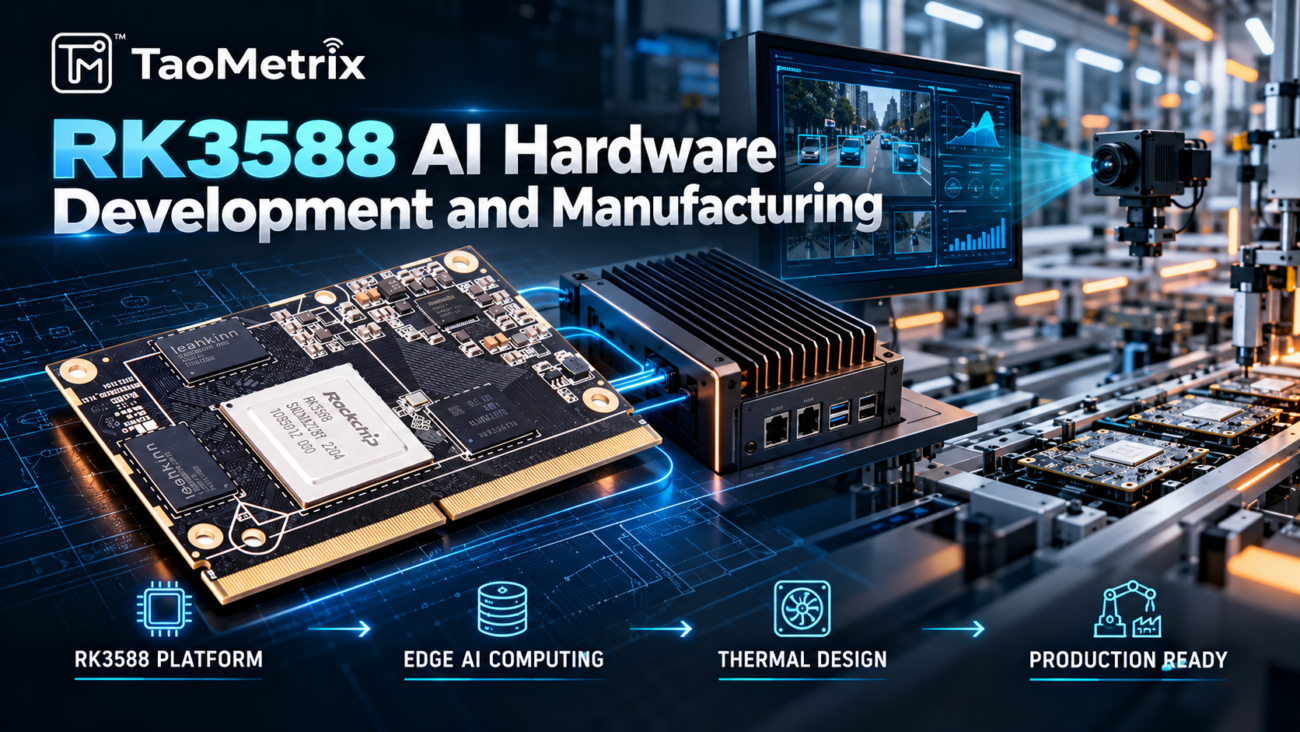
An RK3588 AI box is a compact edge computing device that combines a processor, AI acceleration, camera interfaces, networking, storage, thermal management, and system software in one product.
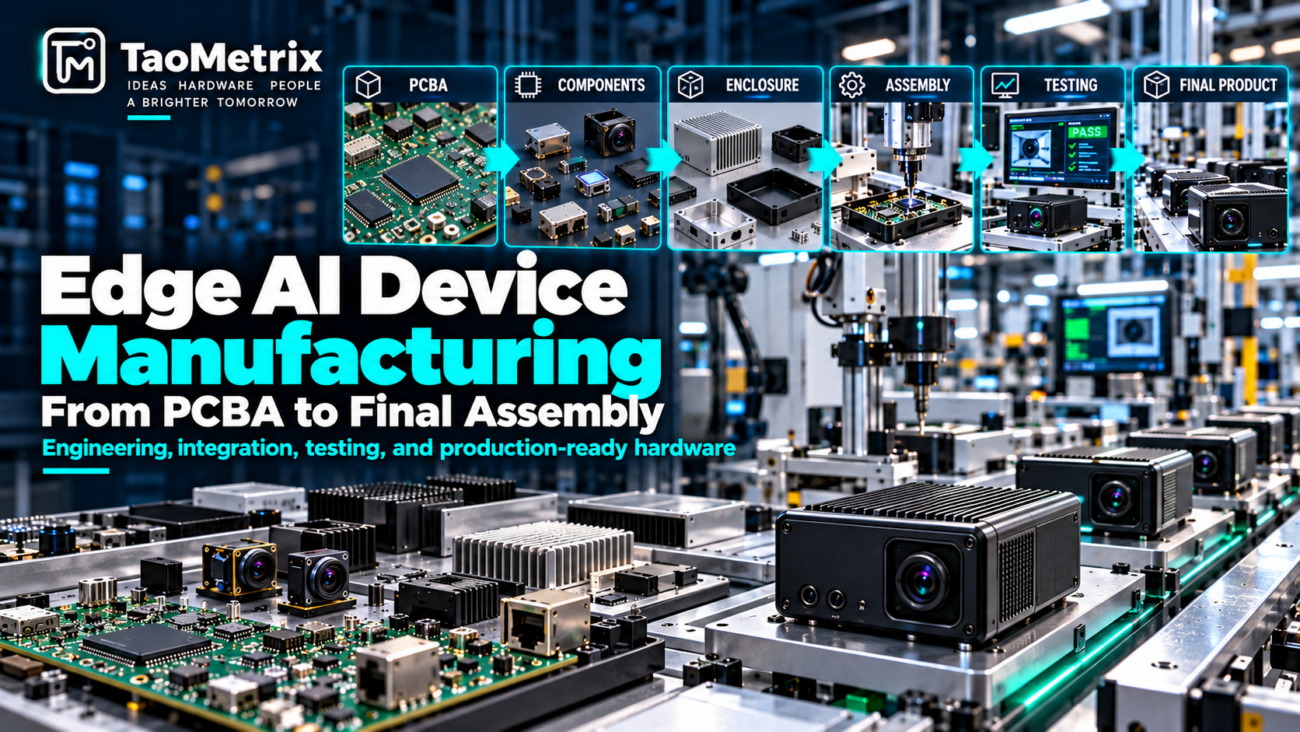
However, moving from a development board demo to a reliable commercial product requires much more than installing an operating system. Hardware design, AI model deployment, interface testing, thermal validation, PCBA production, assembly, and mass-production testing must all be completed.
TaoMetrix supports companies developing custom AI boxes from product definition and engineering prototypes to OEM/ODM production and delivery.
What Is an RK3588 AI Box?
An RK3588 AI box is an edge computing device built around the Rockchip RK3588 platform. It is commonly used to run computer vision, speech recognition, multimedia processing, and other AI workloads locally.
Compared with cloud-only solutions, an RK3588 AI box can process part of the workload on the device. This can help reduce data transmission, improve response time, and support applications in locations with limited or unreliable connectivity.
Typical capabilities include:
- Local AI inference
- Camera and video analytics
- Image and video encoding and decoding
- Multi-display output
- Industrial equipment communication
- Wired and wireless networking
- Local data storage
- Edge device control
Actual performance depends on the AI model, input resolution, camera count, software framework, system load, and thermal design. Chip specifications alone do not determine the performance of the final product.
Where Can RK3588 AI Boxes Be Used?
1. Industrial Vision Inspection
Industrial vision is one of the main applications for RK3588 AI boxes. The device can connect to industrial cameras and analyze products, components, or production-line images locally.
Typical tasks include:
- Product defect detection
- Appearance inspection
- Barcode and QR code recognition
- OCR text recognition
- Component classification
- Assembly inspection
- Safety-zone monitoring
- Workstation status recognition
For industrial projects, the key questions are not only whether the model can run. Customers also need to validate triggering methods, inspection cycle time, false positives, missed detections, low-confidence handling, and PLC communication.
2. Smart Cameras and Video Analytics
An RK3588 AI box can work as a local video analytics gateway for processing camera streams.
Potential applications include:
- Intrusion detection
- People counting
- Area occupancy analysis
- Fall detection
- Construction-site safety monitoring
- Traffic incident detection
- Perimeter security
- Local video analytics
If the project requires multiple video streams, the design team should confirm the number of cameras, resolution, encoding format, frame rate, and end-to-end inference latency at an early stage.
3. Robotics Vision
In mobile robots, inspection robots, and service robots, an AI box can provide local perception and computing functions.
Typical functions include:
- Object detection
- Obstacle recognition
- Person detection
- Visual navigation
- Equipment inspection
- Voice interaction
- Sensor data fusion
Robotics projects may also require CAN, RS-485, UART, USB, Ethernet, or other control interfaces. These interfaces should be validated to ensure reliable communication with the robot controller and actuators.
4. Smart Retail and Self-Service Terminals
AI boxes can also be integrated into smart cabinets, vending machines, self-service equipment, digital signage, and retail cameras.
Possible functions include:
- Customer counting
- Queue analysis
- Product recognition
- Shelf monitoring
- Dwell-time analysis
- Smart recommendations
- Local voice interaction
- Multi-screen content output
These products also require careful planning for enclosure size, mounting method, power input, display interfaces, camera position, and remote software updates.
5. Edge AI Gateways
In industrial IoT and smart-building projects, an RK3588 AI box can connect field devices to cloud platforms or enterprise systems.
It may connect to:
- Industrial sensors
- Cameras
- PLCs
- Robots
- Environmental monitoring devices
- LoRa modules
- 4G or 5G communication modules
- Wi-Fi and Ethernet devices
An edge gateway must usually support data collection, protocol conversion, local analytics, buffering, remote maintenance, and offline recovery.
Key Hardware Components of an RK3588 AI Box
Processor and AI Acceleration
The processor platform should be selected according to the actual workload. Customers should define:
- Which AI models will be used
- Whether YOLO models are required
- Whether OCR or speech models are needed
- Whether a lightweight language model will run locally
- How many cameras must be processed
- Whether real-time response is required
- Whether the product must run continuously
TaoMetrix can help evaluate the processor, memory, storage, and interface configuration based on the application instead of relying on one theoretical TOPS number.
Memory and Storage
An AI box normally requires system memory and local storage. Design decisions should consider:
- Operating-system requirements
- AI model size
- Video buffering
- Log storage
- Local databases
- OTA update packages
- Long-term data generation
Depending on the project, the product may use eMMC, NVMe SSD, a TF card, or another storage solution. Industrial products should also consider data security, write endurance, and field replacement.
Camera and Sensor Interfaces
An AI box may need to support:
- MIPI CSI
- USB cameras
- HDMI input
- Ethernet cameras
- Depth cameras
- LiDAR
- IMU
- Temperature and humidity sensors
- Industrial sensors
Interface quantity, bandwidth, and driver compatibility should be tested during the prototype stage rather than after mass production begins.
Network and Communication
Depending on the application, the product may require:
- Gigabit Ethernet
- 2.5G Ethernet
- Wi-Fi
- Bluetooth
- 4G LTE
- 5G
- LoRa or LoRaWAN
- CAN
- RS-232
- RS-485
- USB
If the device will be deployed remotely, remote configuration, device monitoring, and firmware update methods should be defined early.
Thermal Design
Many AI boxes operate continuously and generate heat under sustained workloads. Thermal design directly affects stability and product life.
Common thermal solutions include:
- Active fan cooling
- Aluminum enclosures
- Heat sinks
- Heat pipes
- Thermal pads
- Customized airflow paths
- Fan-speed control
Customers should specify the operating temperature, installation location, acceptable noise level, and whether a fanless design is required.
From Development Board to Product: What Must Be Completed?
Step 1: Define the Product Requirements
Before development begins, define:
- Product application
- Target users
- AI model
- Camera count
- Computing requirements
- Interface requirements
- Enclosure size
- Power input
- Operating environment
- Prototype quantity
- Expected production quantity
- Target launch date
Clear requirements make technical evaluation, quotation, and scheduling more accurate.
Step 2: Define the Hardware Architecture
The engineering team should determine:
- Main processor
- Memory
- Storage
- Power architecture
- Interface layout
- Communication modules
- Camera inputs
- Thermal structure
- Enclosure design
If a standard core board or development board is used, confirm whether it is suitable for long-term supply and volume production.
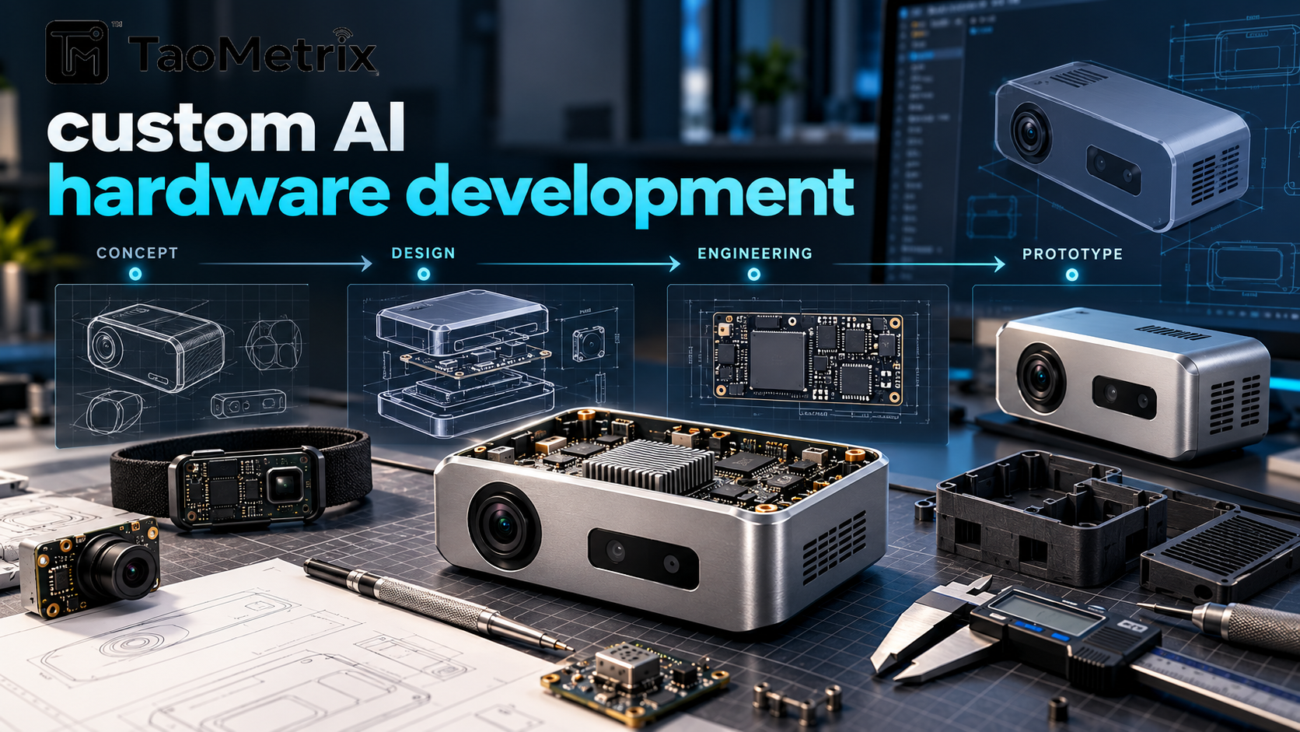
Step 3: Build an Engineering Prototype
The engineering prototype is used to validate the system architecture and core functions. It may include:
- Custom PCBA
- Core-board or mainboard integration
- Initial enclosure
- Camera and sensor connections
- Firmware flashing
- AI model deployment
- Network and communication testing
The prototype is not always the final product. Its main purpose is to identify technical risks early.
Step 4: Validate the AI Model and Software
An RK3588 AI box should be tested for:
- Model conversion
- RKNN runtime compatibility
- INT8 quantization
- Inference speed
- Memory usage
- Multi-stream video processing
- Long-duration stability
- Error recovery
- Remote updating
If a model cannot run reliably, simply increasing hardware specifications may not solve the software compatibility problem.
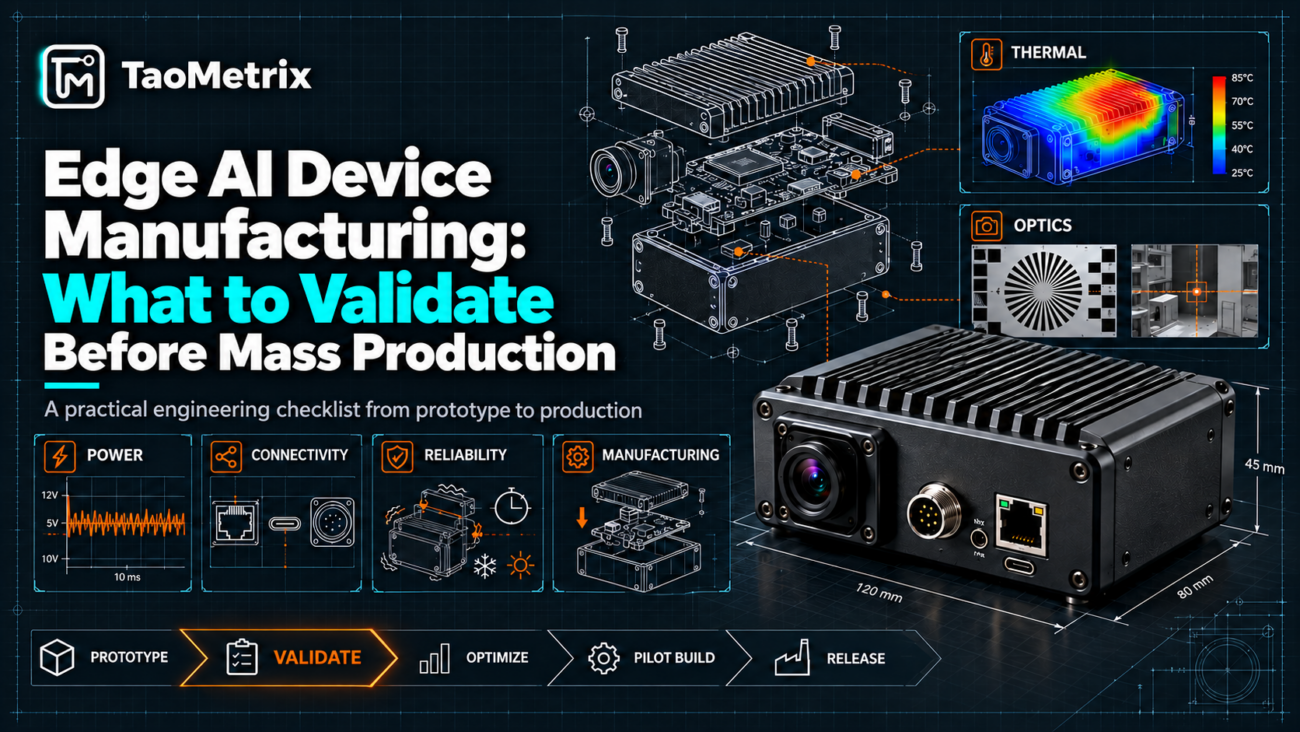
Step 5: Conduct Thermal and Reliability Tests
Testing may include:
- Full-load operation
- High- and low-temperature testing
- Long-duration operation
- Repeated boot testing
- Network-disconnection recovery
- Power fluctuation testing
- Storage read/write testing
- Connector insertion and removal
- Fan-life evaluation
The exact test plan should be based on the final application and delivery requirements.
Step 6: Complete DFM and Pilot Production
Before mass production, the design should be reviewed for manufacturing efficiency. DFM may cover:
- PCB layout
- Component availability
- Soldering process
- Connector fixing
- Enclosure assembly
- Screws and cables
- Test points
- Firmware flashing
- Functional inspection
- Packaging protection
A pilot run can reveal assembly and testing problems that are not visible in engineering samples.
How TaoMetrix Supports RK3588 AI Box Projects
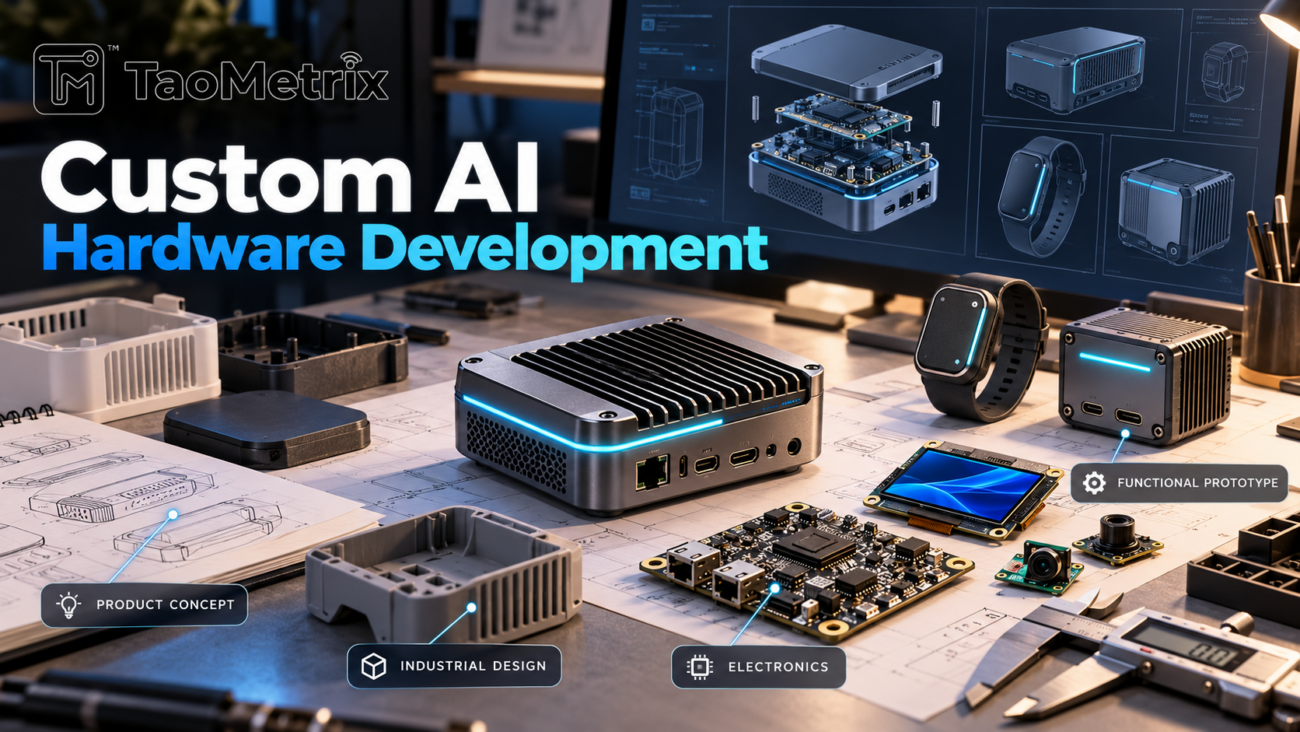
TaoMetrix supports companies developing custom AI hardware at different project stages.
Potential support includes:
- Product requirement review
- AI hardware platform evaluation
- RK3588 solution assessment
- Custom PCBA development
- Camera and sensor integration
- Power and thermal design coordination
- Enclosure and mechanical design coordination
- Firmware and system integration
- AI model deployment testing
- Functional testing
- Engineering prototype production
- DFM review
- Pilot production
- OEM/ODM assembly
- Packaging and delivery coordination
The exact scope depends on the customer’s design files, product functions, expected quantity, development stage, and delivery requirements.
What Should You Ask an AI Box Manufacturer?
Before selecting a supplier, ask:
- Can the supplier support both prototypes and mass production?
- Does the supplier have PCBA and final assembly capabilities?
- Does the team understand RK3588 and the RKNN software environment?
- Can the supplier integrate cameras and sensors?
- Can the supplier support thermal and mechanical design?
- Will the supplier provide engineering test records?
- Can the supplier support pilot production?
- How are component substitutions controlled?
- Can the supplier provide firmware flashing and functional testing?
- Can the supplier support OEM/ODM and private-label production?
Do not compare suppliers only by unit price. Development time, prototype quality, engineering communication, component stability, and production consistency all affect the total project cost.
What Should Customers Prepare Before Contacting TaoMetrix?
To improve the efficiency of the initial evaluation, prepare:
- Product application
- Product structure drawing or concept sketch
- AI model name or inference requirements
- Camera quantity and specifications
- Interface list
- Power requirements
- Target dimensions
- Operating environment
- Prototype quantity
- Expected production quantity
- Target market
- Certification requirements
- Existing BOM
- Existing PCBA or development board
- Target schedule
If complete technical documents are not available, you can still provide the product purpose, target users, and main functions for an initial discussion.
Frequently Asked Questions
Is RK3588 suitable for AI box development?
RK3588 can be considered for computer vision, robotics, smart terminals, and edge computing projects. Final suitability should be confirmed through model, camera, interface, software, thermal, and production validation.
Can an RK3588 AI box run YOLO?
Whether YOLO can run reliably depends on the model version, input resolution, quantization method, RKNN compatibility, and application software. The final frame rate should be measured on the target hardware.
Can the enclosure and interfaces be customized?
Yes. Depending on the project, the PCBA, interfaces, enclosure, thermal system, firmware, branding, and packaging may be customized. The customization level depends on quantity, budget, schedule, and supply-chain conditions.
Is an AI box suitable for volume production?
An AI box can be produced at volume, but component selection, DFM review, pilot production, functional testing, reliability testing, and quality control should be completed before mass production.
Which project stages can TaoMetrix support?
TaoMetrix can evaluate and support product requirements, hardware development, PCBA integration, prototype validation, testing, pilot production, OEM/ODM manufacturing, and delivery coordination.
Conclusion
An RK3588 AI box is more than a processor inside an enclosure. To deploy it successfully in industrial, robotic, or commercial environments, the product requires a complete process covering hardware architecture, AI model deployment, camera integration, thermal design, software validation, PCBA manufacturing, and final testing.
If you are developing an industrial vision device, robotics terminal, smart camera, edge gateway, or another AI product, TaoMetrix can help evaluate the appropriate development and manufacturing path based on your application, interfaces, prototype quantity, and production plan.
Planning an RK3588 AI box? Share your application, AI model, camera count, interface requirements, target quantity, and schedule with TaoMetrix for an initial technical review.
This article follows the general topic structure of Seeed Studio’s public introduction to Rockchip RK3576/RK3588 AI boxes, including edge AI applications, software deployment, expansion, and real-world development. It is independently written for TaoMetrix and does not copy Seeed Studio’s product claims or marketing content.