If you are developing an AI product, choosing the right manufacturing partner can affect your development cost, launch schedule, product quality, and long-term supply chain.
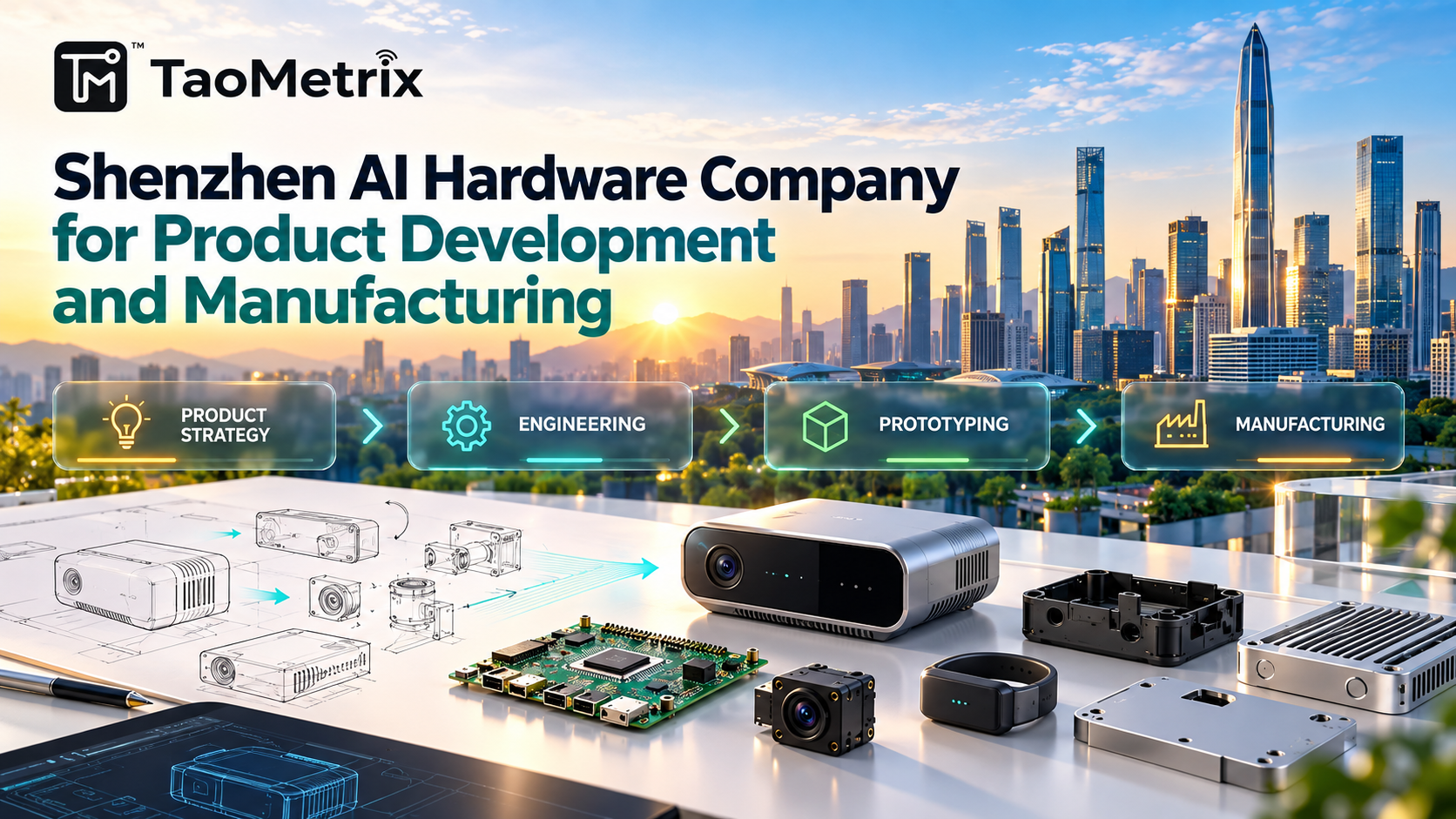
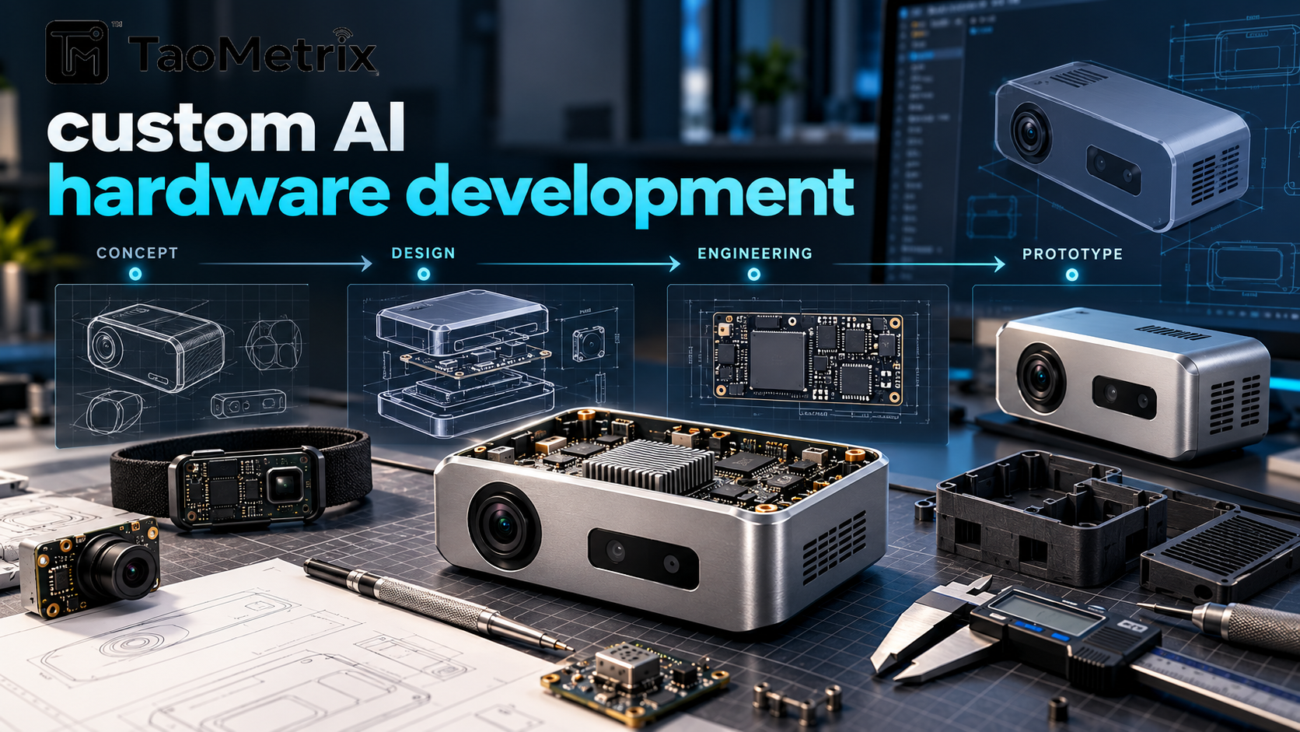
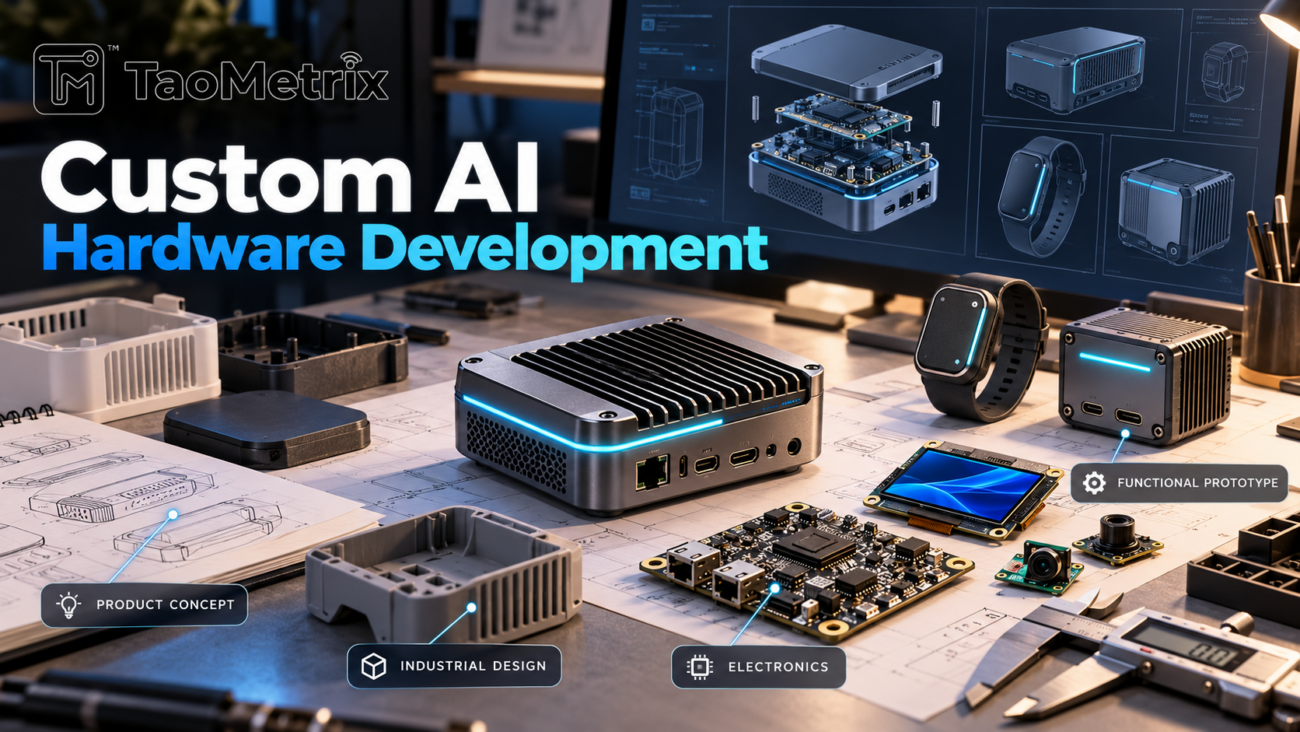
A Shenzhen AI hardware company can provide more than assembly. The right partner can help you evaluate the product idea, select suitable components, develop prototypes, test the design, prepare pilot production, and support OEM/ODM manufacturing.
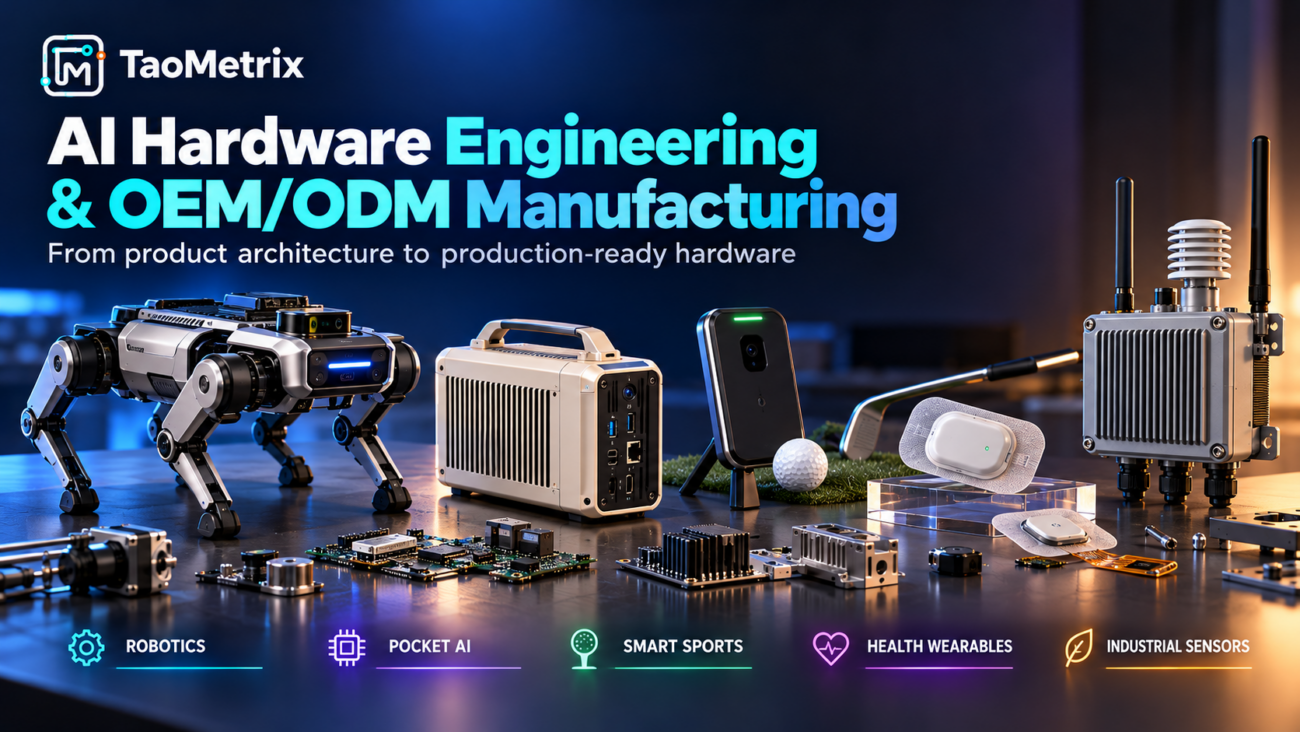
TaoMetrix is an AI hardware development and manufacturing partner based in Shenzhen, China. The company supports customers developing smart wearables, edge AI devices, AI cameras, robotics hardware, health and wellness devices, and other connected products.
Why Choose a Shenzhen AI Hardware Company?
Shenzhen is one of the world’s major electronics manufacturing centers. Customers can access a broad supplier network covering:
- Electronic components
- PCB fabrication
- PCBA and SMT assembly
- Sensors and wireless modules
- Batteries and charging systems
- Enclosures and injection molding
- Tooling and mechanical parts
- Product testing
- Packaging and logistics
For an AI hardware project, access to this ecosystem can shorten communication between engineering, suppliers, and production teams.
However, location alone does not guarantee a successful project. A manufacturer should also understand product development, system integration, testing, and production risk.
What Should Customers Look for in a Shenzhen AI Hardware Company?
Before selecting a partner, review the following points.
1. Product Development Capability
A suitable partner should be able to understand more than a purchase order.
Ask whether the company can review:
- Product requirements
- Arquitetura de hardware
- Schematics
- Ficheiros de PCB
- BOM
- Firmware
- Industrial design
- Existing prototypes
If your product is still at the concept stage, ask whether the company can help define the next technical step.
2. Prototype and Engineering Support
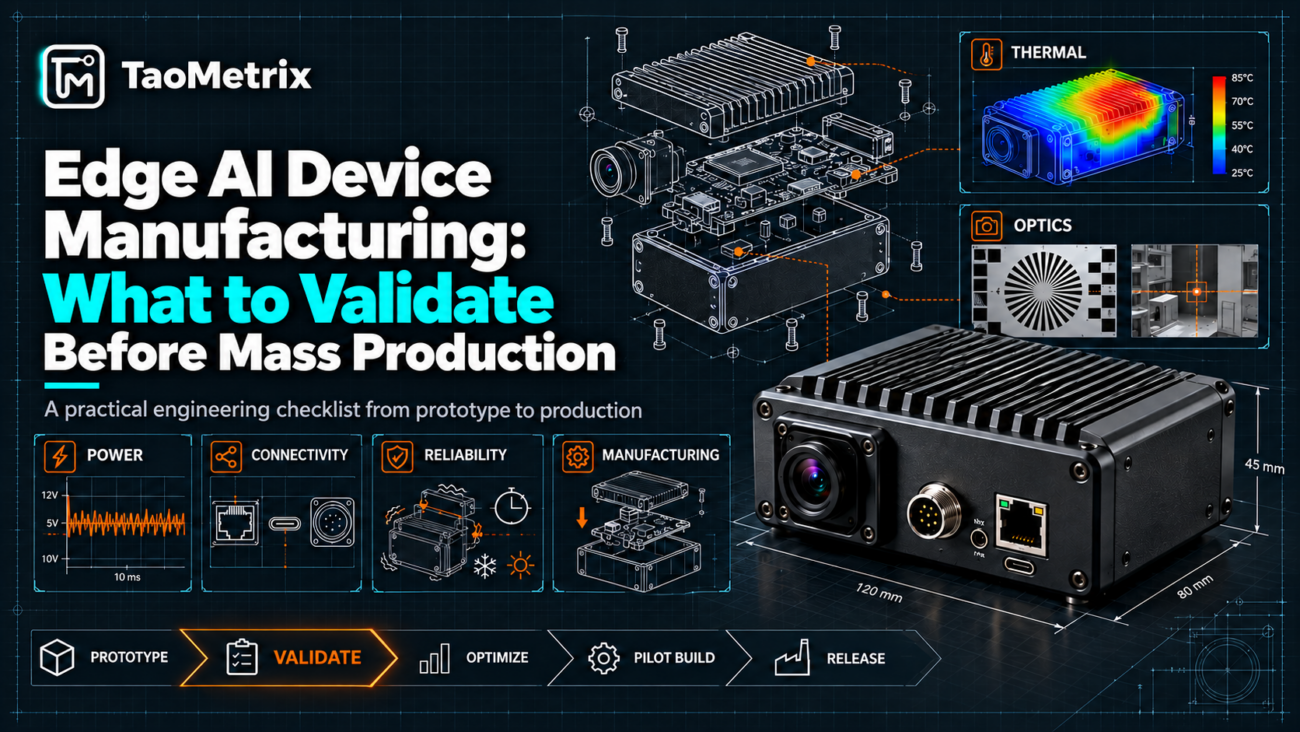
A prototype should be used to validate more than whether the device can turn on.
A proper review may include:
- Core functions
- Sensor performance
- Wireless communication
- Power consumption
- Battery and charging
- Thermal behavior
- Firmware stability
- Mechanical fit
- User operation
Prototype testing can reveal problems before tooling and mass production.
3. PCBA and Assembly Capability
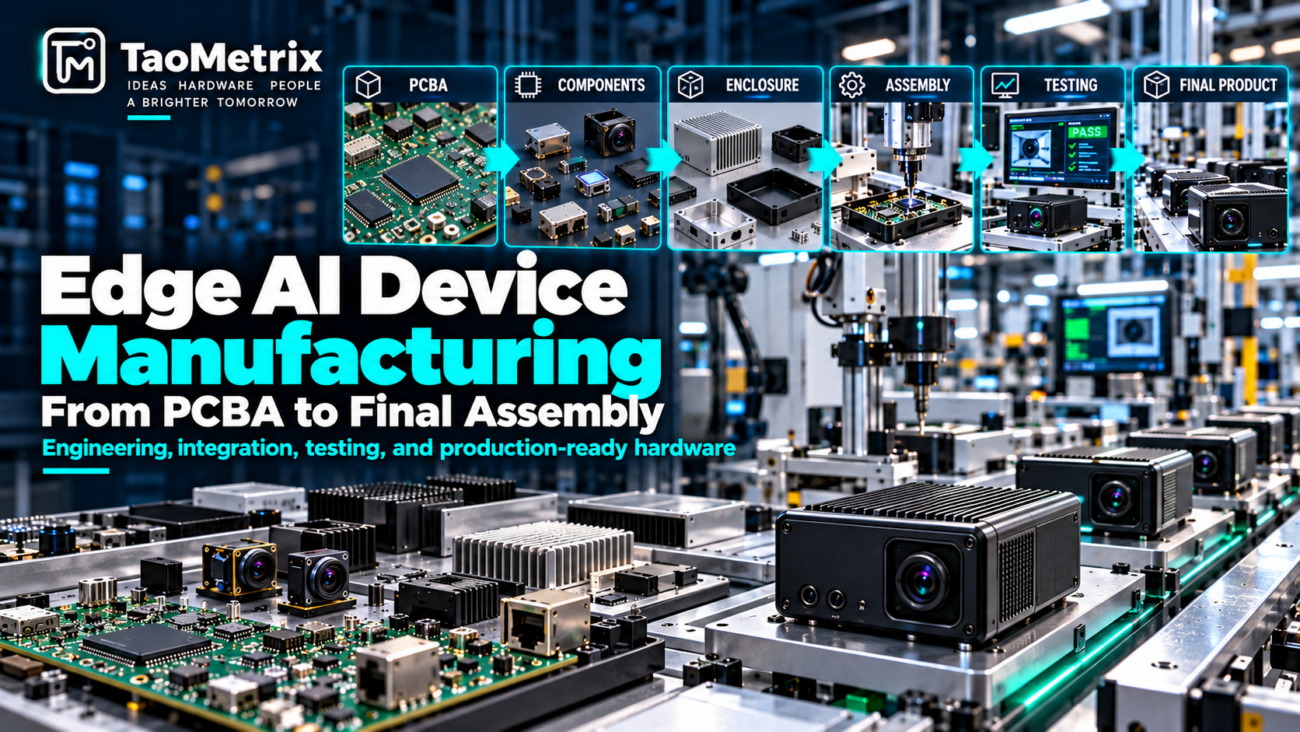
The PCB and PCBA determine how reliably the product can be manufactured.
Important considerations include:
- Component availability
- PCB layout
- RF performance
- Signal integrity
- Power design
- Thermal management
- Production test points
- SMT assembly
- Final product assembly
A design that works in a development environment may still require changes before it is ready for production.
4. Pilot Production Experience
Pilot production is a small manufacturing run before regular mass production.
It helps customers check:
- Assembly procedures
- Production yield
- Material readiness
- Testing methods
- Defect rates
- Embalagem
- Delivery timing
- Production cost
A Shenzhen AI hardware company should be able to explain how pilot production will be managed and what information will be delivered afterward.
5. Supply Chain Coordination
AI products often use processors, memory, sensors, batteries, wireless modules, and mechanical parts from different suppliers.
A capable partner should help coordinate:
- Supplier selection
- Component availability
- Alternative parts
- Material purchasing
- Production scheduling
- Quality inspection
- Delivery planning
This coordination is especially important for products that require long-term production.
What Does TaoMetrix Support?
TaoMetrix supports customers through different stages of AI hardware development and manufacturing.
Depending on the project, the support may include:
- Product feasibility review
- Hardware architecture planning
- Schematic design
- PCB layout coordination
- Component selection
- PCBA assembly
- Testes funcionais
- Firmware and hardware integration
- Mechanical coordination
- Prototype development
- Produção-piloto
- Final product assembly
- Packaging coordination
- Quality control
- Supplier management
- Certification planning and test coordination
Some engineering and manufacturing activities may be completed internally, while specialized processes such as PCB fabrication, SMT production, tooling, and injection molding may be coordinated through qualified manufacturing partners.
The final scope depends on the product requirements, project stage, quantity, schedule, and available documentation.
Products That Can Be Developed in Shenzhen
A Shenzhen AI hardware company may support many types of products, including:
- Óculos com IA
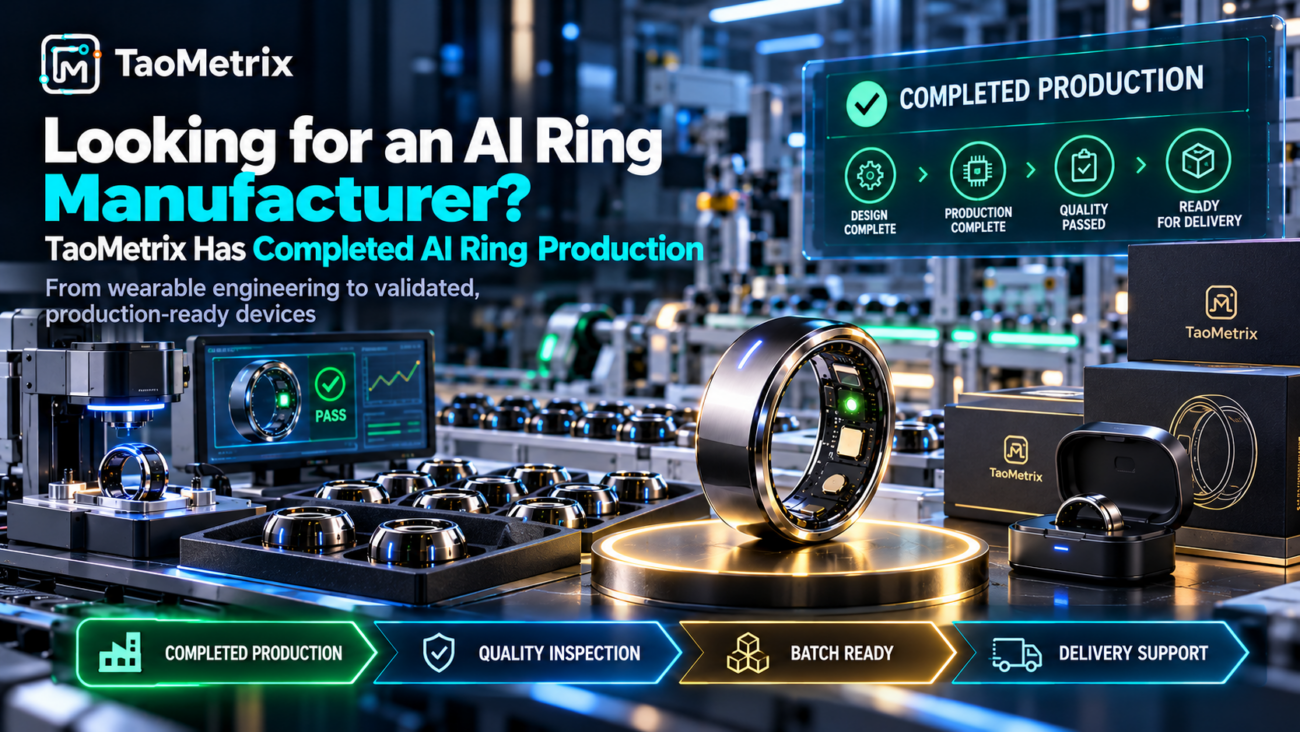
- Smart rings
- Dispositivos vestíveis com IA
- Câmaras inteligentes
- Dispositivos de IA de ponta
- Industrial sensors
- Robotics controllers
- Health monitoring devices
- Smart home products
- Voice-enabled devices
- Portable AI terminals
- Custom IoT hardware
Each product category has different requirements.
Por exemplo:
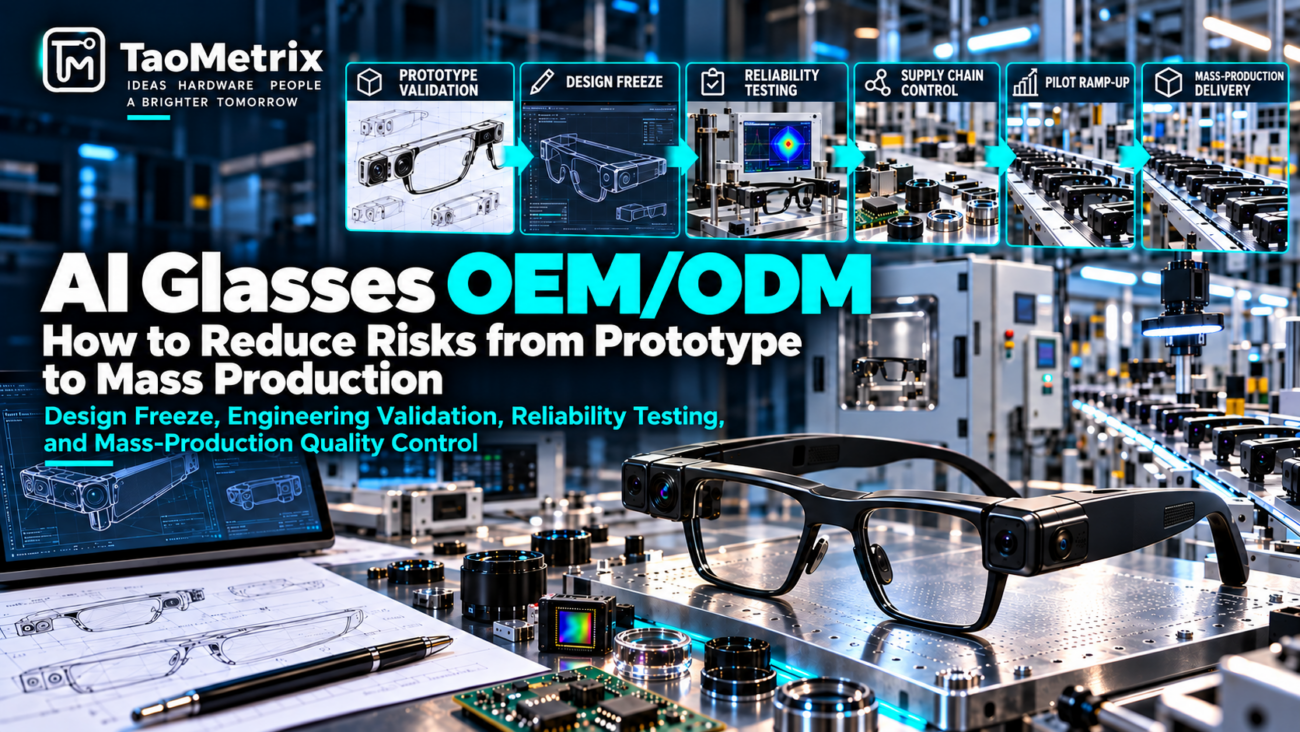
- AI glasses require compact design, battery optimization, wireless connectivity, and thermal control.
- AI rings require miniaturized electronics, sensor integration, charging design, and mechanical precision.
- AI cameras require image processing, storage, connectivity, and sustained thermal performance.
- Industrial AI devices require reliability, testing, enclosure protection, and stable long-term supply.
The Shenzhen AI Hardware Development Process
Step 1: Share the Product Brief
Provide:
- Product purpose
- Target users
- Main functions
- Existing files
- Prototype information
- Expected quantity
- Target market
- Expected launch date
Step 2: Review Feasibility
The manufacturer evaluates:
- Arquitetura de hardware
- Processor and sensor requirements
- Power budget
- Mechanical limitations
- Component availability
- Testing requirements
- Production complexity
Step 3: Develop the Prototype
The project moves into prototype development based on the agreed technical plan.
Step 4: Test and Improve
The prototype is tested and adjusted according to product requirements.
Step 5: Prepare Pilot Production
The design, BOM, testing process, assembly method, and quality requirements are reviewed.
Step 6: Start Mass Production
After pilot validation and customer approval, the product can move toward regular OEM/ODM production.
OEM or ODM: Which Model Is Right for You?
OEM
OEM is suitable when the customer already owns the complete product design.
The customer usually provides:
- Schematics
- Ficheiros de PCB
- BOM
- Firmware
- Mechanical files
- Test requirements
The manufacturer focuses on production, assembly, testing, packaging, and delivery.
ODM
ODM is suitable when the customer has a product direction but needs support with engineering and manufacturing.
The ODM partner may support:
- Product architecture
- Hardware development
- Prototype design
- Firmware integration
- Mechanical coordination
- Testing
- Production preparation
Custom Development
Custom development is suitable for customers with a new idea, early prototype, or special product requirements.
The project usually begins with feasibility evaluation before entering engineering development.
Questions to Ask Before Choosing a Shenzhen Manufacturer
Ask the following questions:
- Can you support prototype development?
- Can you review my existing design?
- Which engineering functions are handled internally?
- Can you provide PCBA and final assembly?
- How is functional testing performed?
- Can you support pilot production?
- How are component shortages managed?
- How are design files and intellectual property protected?
- Can you coordinate certification testing?
- What information is needed before receiving a project evaluation?
- What are the estimated lead time and order requirements?
- Who will manage communication during the project?
Clear answers to these questions can help you compare suppliers more effectively.
What Should You Prepare Before Contacting TaoMetrix?
Prepare as much of the following information as possible:
- Product description
- Main functions
- Product drawings or concept images
- Existing prototype
- Schematic or PCB files
- BOM
- Preferred components
- Prototype quantity
- Expected production quantity
- Target cost
- Target schedule
- Target market
- Certification requirements
- Requisitos de embalagem
- NDA or confidentiality requirements
If your product is still at the idea stage, you can start with a non-confidential overview.
Perguntas Frequentes
What is a Shenzhen AI hardware company?
A Shenzhen AI hardware company may provide product development, electronic engineering, prototype manufacturing, PCBA assembly, testing, supply chain coordination, and OEM/ODM production for AI-enabled devices.
Can TaoMetrix work with overseas customers?
TaoMetrix supports international customers through technical communication, project coordination, production management, and delivery planning.
Can TaoMetrix help if I do not have a complete design?
TaoMetrix can review an early-stage product concept and determine what information is needed for feasibility evaluation and engineering planning.
Does TaoMetrix support both OEM and ODM?
Yes. TaoMetrix can evaluate OEM projects based on customer designs and ODM or custom development projects that require engineering support.
Can TaoMetrix support small prototype orders?
Prototype and pilot quantities depend on product complexity, component availability, tooling requirements, and the approved project plan.
How do I start a project?
Send a product brief, available technical files, expected quantity, target schedule, and target market. TaoMetrix can then review the project and discuss the next step.
Conclusão
A Shenzhen AI hardware company can help you access a strong electronics supply chain, but the right partner should provide more than manufacturing capacity.
For a successful AI hardware project, you need coordinated support across product requirements, hardware engineering, sensors, power, connectivity, PCBA, testing, pilot production, and final assembly.
TaoMetrix helps customers move from product concept and prototype to validated hardware and OEM/ODM manufacturing. If you are looking for a Shenzhen AI hardware company, start by sharing your product requirements and development goals with TaoMetrix.