If you are developing an AI hardware product, the hardest part is usually not creating the idea. The real challenge is turning that idea into a reliable, testable, and manufacturable product.
You may already have:
- A product concept
- A list of required functions
- A development board
- An early prototype
- An AI software system
- An industrial design
- A target market
However, moving from an idea to mass production requires decisions about processors, sensors, power, mechanical design, connectivity, firmware, testing, certification, and supply chain management.
Custom AI hardware development allows you to create hardware based on your specific product requirements instead of relying only on standard development boards or off-the-shelf devices.
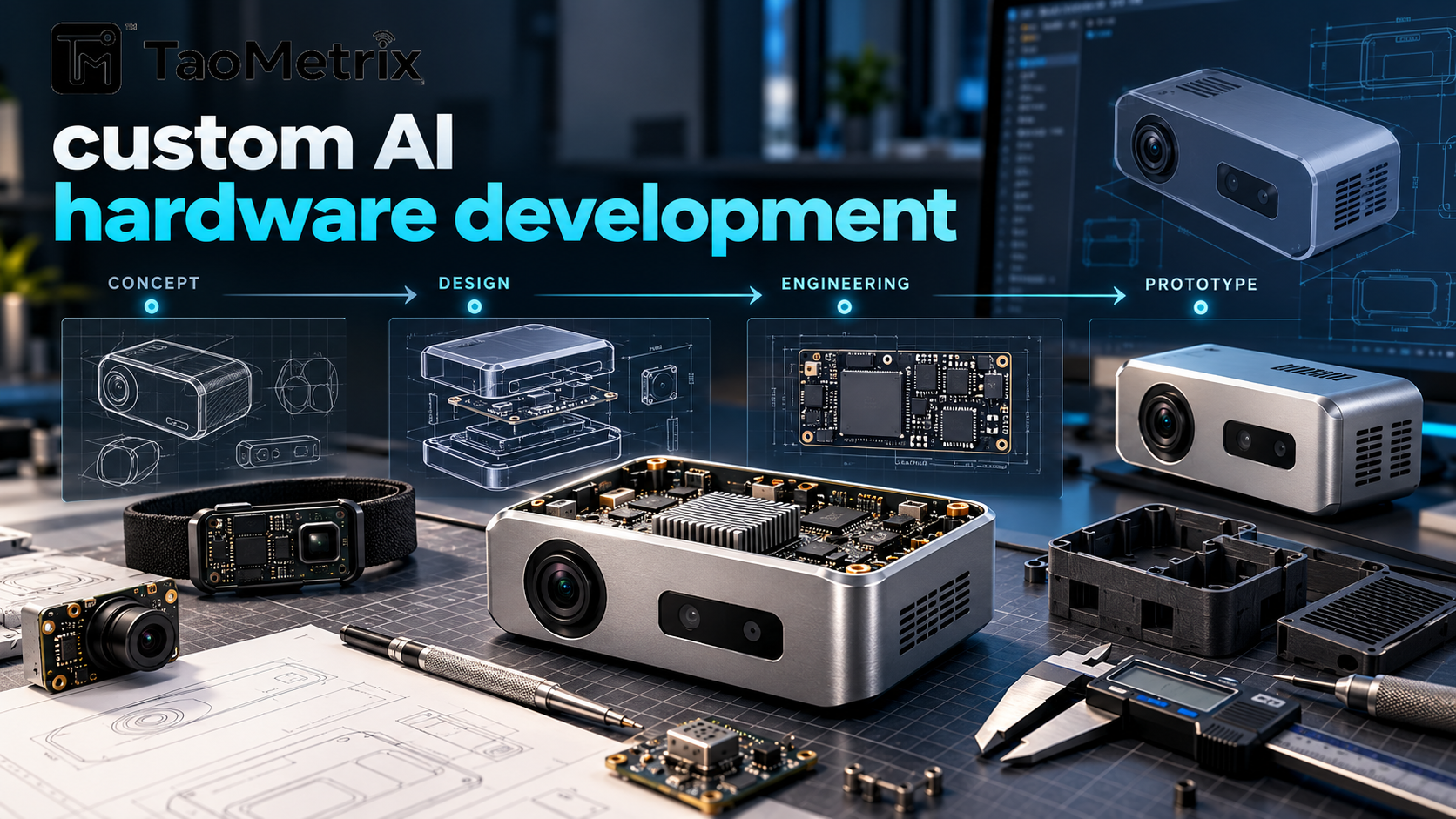
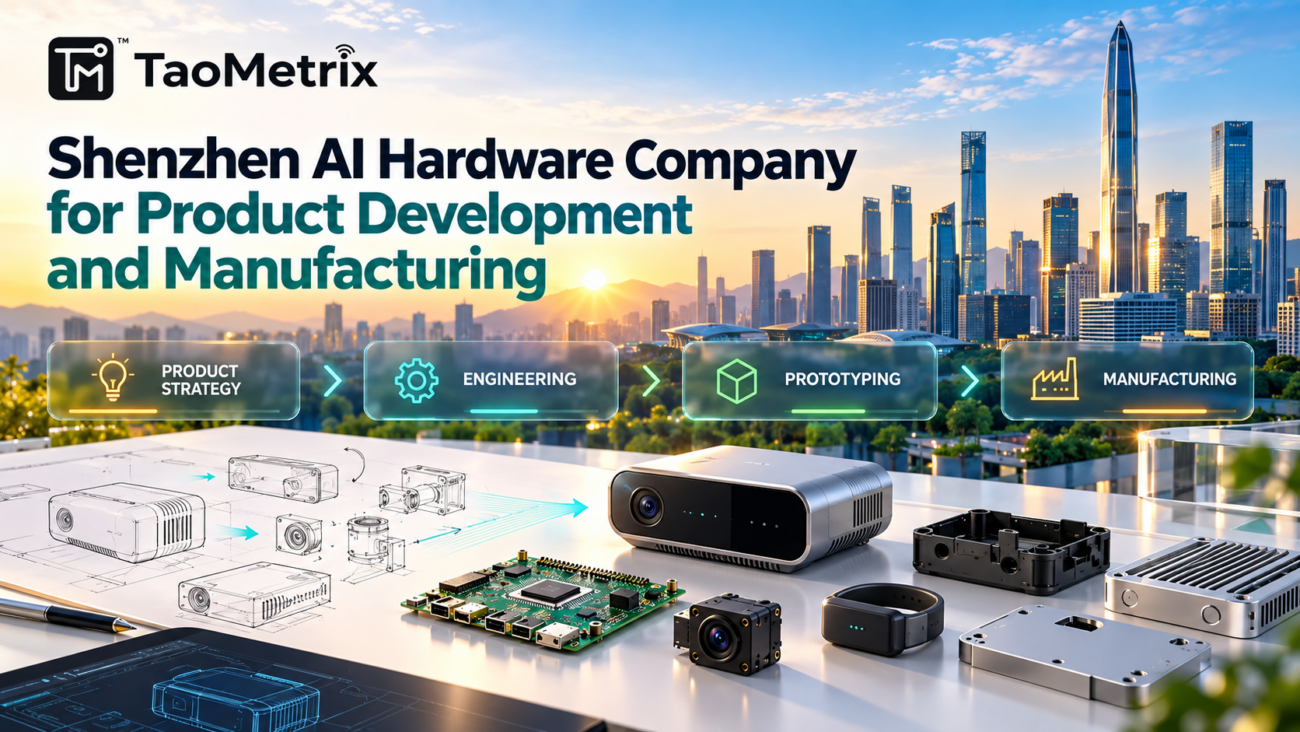
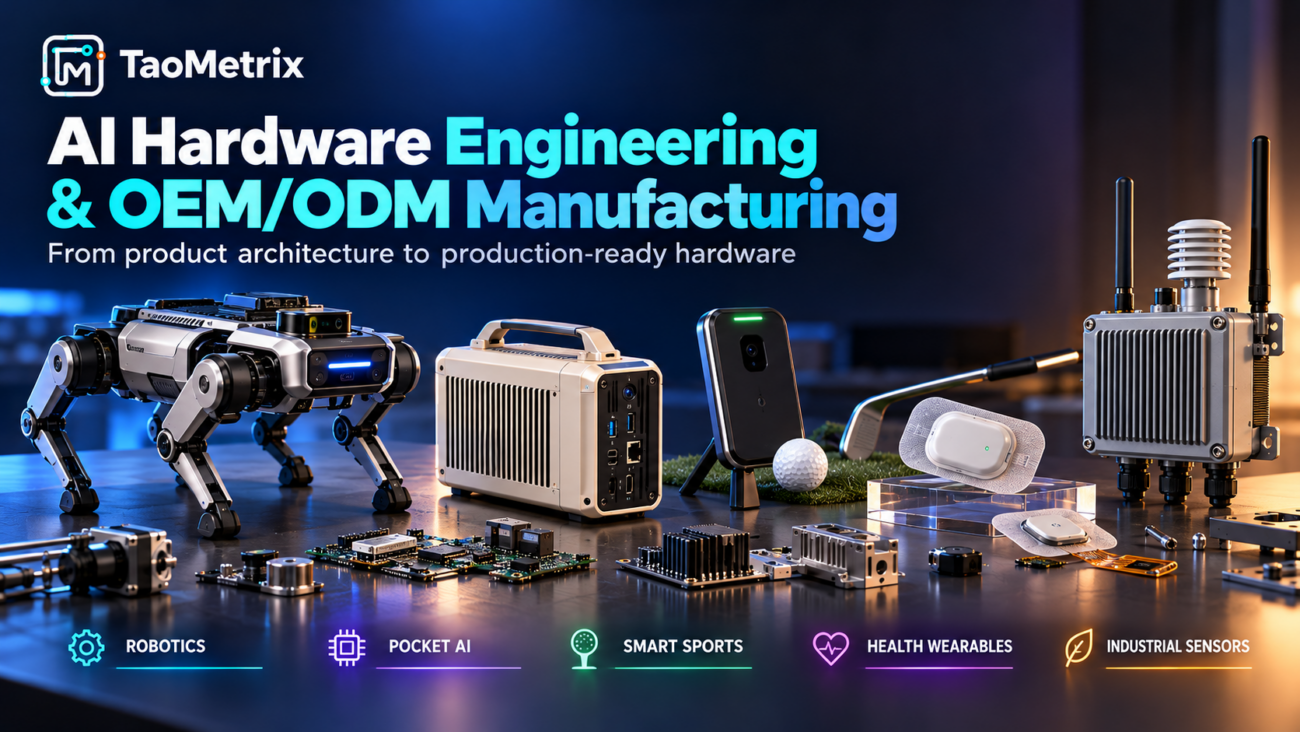
TaoMetrix supports customers from feasibility evaluation and hardware engineering to prototype development, testing, pilot production, and OEM/ODM manufacturing.
What Is Custom AI Hardware Development?
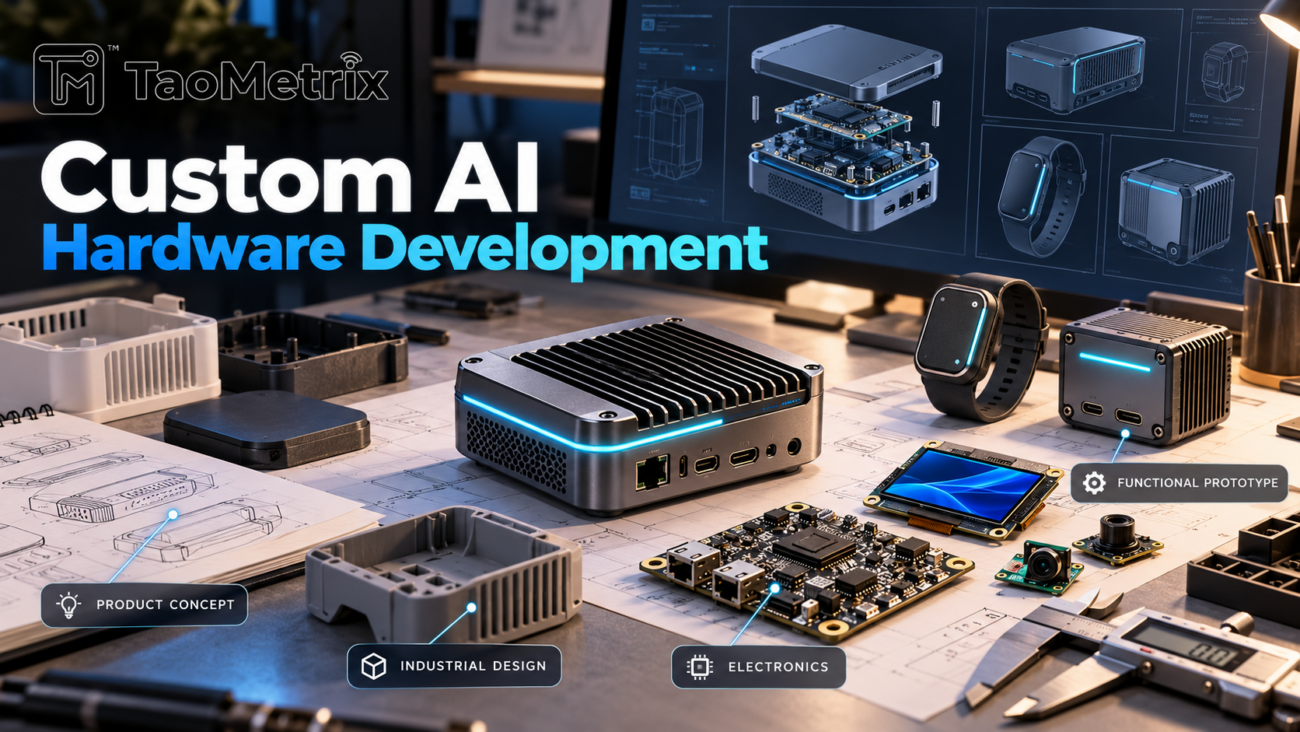
Custom AI hardware development is the process of designing and manufacturing an AI-enabled product according to its intended functions, operating environment, size, power requirements, performance targets, cost, and production plan.
It may include:
- Main processors and AI accelerators
- Cameras and image sensors
- Microphones and audio components
- Motion and environmental sensors
- Memory and storage
- Batteries and charging systems
- Bluetooth, Wi-Fi, or cellular connectivity
- PCB and PCBA development
- Embedded firmware
- Mechanical structures and enclosures
- Testes funcionais
- Pilot production and mass manufacturing
The goal is not simply to make a device turn on. The goal is to create a product that works reliably in real-world conditions and can be manufactured consistently.
Why Do Customers Need Custom AI Hardware?
Development boards are useful for early validation, but they are not always suitable for commercial products.
You may need custom AI hardware development when:
- The product must fit a specific size or enclosure
- Multiple sensors must be integrated
- Battery life is a key requirement
- AI inference must run locally
- A standard development board is too expensive
- The product requires a custom PCBA
- A special communication method is needed
- You plan to manufacture the product at scale
- The existing prototype is difficult to assemble
- The product must meet market-specific requirements
Custom development gives you greater control over product performance, size, power consumption, cost, and user experience.
What Should You Prepare Before Contacting a Manufacturer?
You do not need to have a complete engineering package before starting a discussion. However, more information usually leads to a more accurate project evaluation.
Product Information
Explain:
- What the product does
- Who will use it
- What problem it solves
- Where it will be used
- Which functions are essential
- Which functions are optional
Technical Information
If available, provide:
- Preferred processor or chipset
- AI computing requirements
- Sensores
- Wireless communication
- Battery capacity
- Charging method
- Product dimensions
- Target operating time
- Display or audio requirements
- Operating temperature
Commercial Information
It is also useful to prepare:
- Prototype quantity
- Expected production quantity
- Target launch date
- Target market
- Certification requirements
- Target unit cost
- Requisitos de embalagem
- Budget range
If you only have an early-stage product idea, you can begin with a short non-confidential product brief.
The Custom AI Hardware Development Process
Step 1: Product Requirement Review
The manufacturer first needs to understand your product objectives before preparing a development plan or quotation.
The review may cover:
- Product functions
- AI workload
- Arquitetura de hardware
- Sensor requirements
- Power targets
- Mechanical space
- Connectivity
- Production quantity
- Testing requirements
- Certification planning
The purpose is to determine whether the product has a realistic development path.
Step 2: Hardware Architecture
Hardware architecture defines how the main components work together.
It may include:
- Main processor
- AI accelerator
- Memory
- Storage
- Camera
- Motion sensors
- Audio components
- Wireless modules
- Power management
- Battery and charging circuits
Component selection should consider more than performance. Availability, cost, power consumption, lifecycle, software compatibility, and production risk are also important.
Step 3: Schematic and PCB Development
After the hardware architecture is defined, the project can move into schematic and PCB development.
Important considerations include:
- Power stability
- Signal integrity
- RF performance
- High-speed signal routing
- Audio interference
- Thermal space
- Production test points
- SMT assembly requirements
- Component availability
A production-ready PCB should not only work in a laboratory. It should also be suitable for repeatable manufacturing, testing, and maintenance.
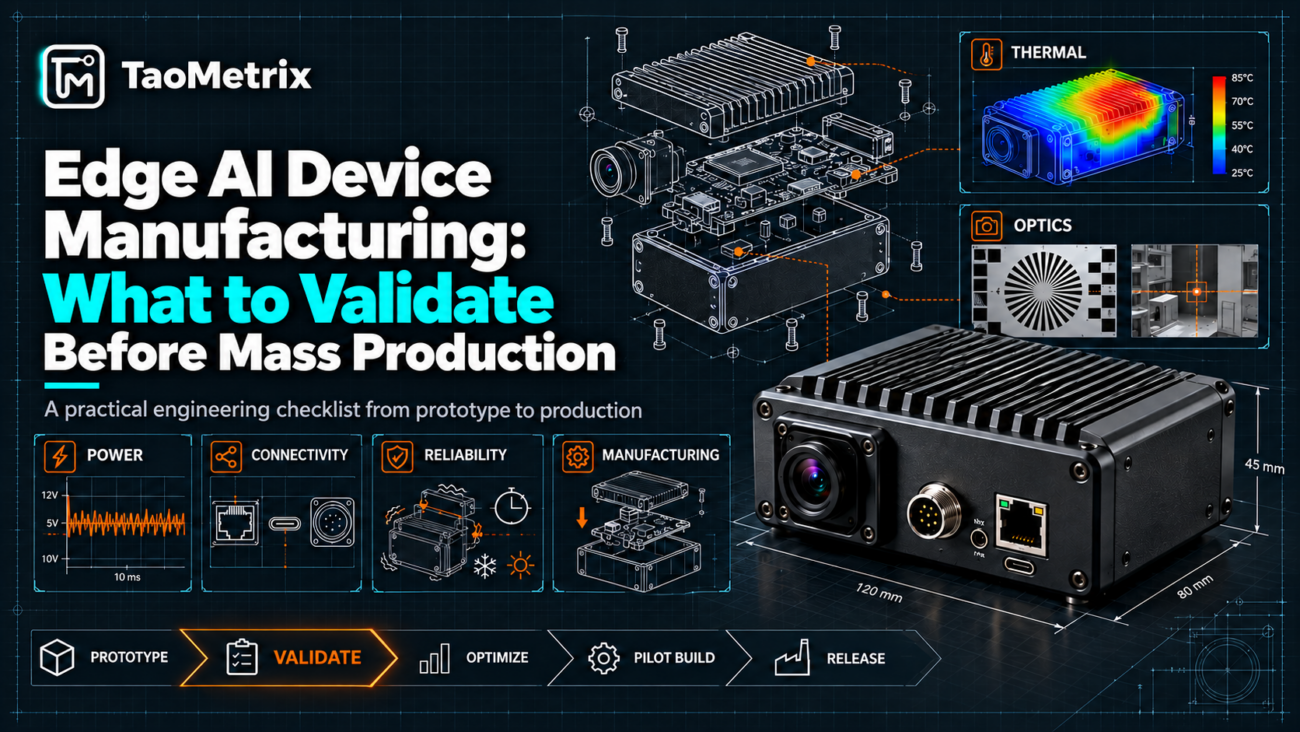
Step 4: Prototype Development
The prototype stage is used to verify the main product functions.
Testing may include:
- Core product functions
- Sensor performance
- AI response
- Wireless connectivity
- Battery life
- Charging performance
- Temperature rise
- Firmware stability
- Mechanical fit
- User interaction
A prototype helps identify problems early. It should not automatically be treated as the final production version.
Step 5: Engineering Validation and Design Optimization
After prototype testing, the product may require several rounds of improvement.
Common improvements include:
- Reducing power consumption
- Improving wireless stability
- Replacing components
- Revising the PCB
- Improving thermal performance
- Adjusting the enclosure
- Simplifying assembly
- Adding production test points
- Improving firmware recovery and error handling
This stage helps reduce tooling, pilot production, and mass manufacturing risks.
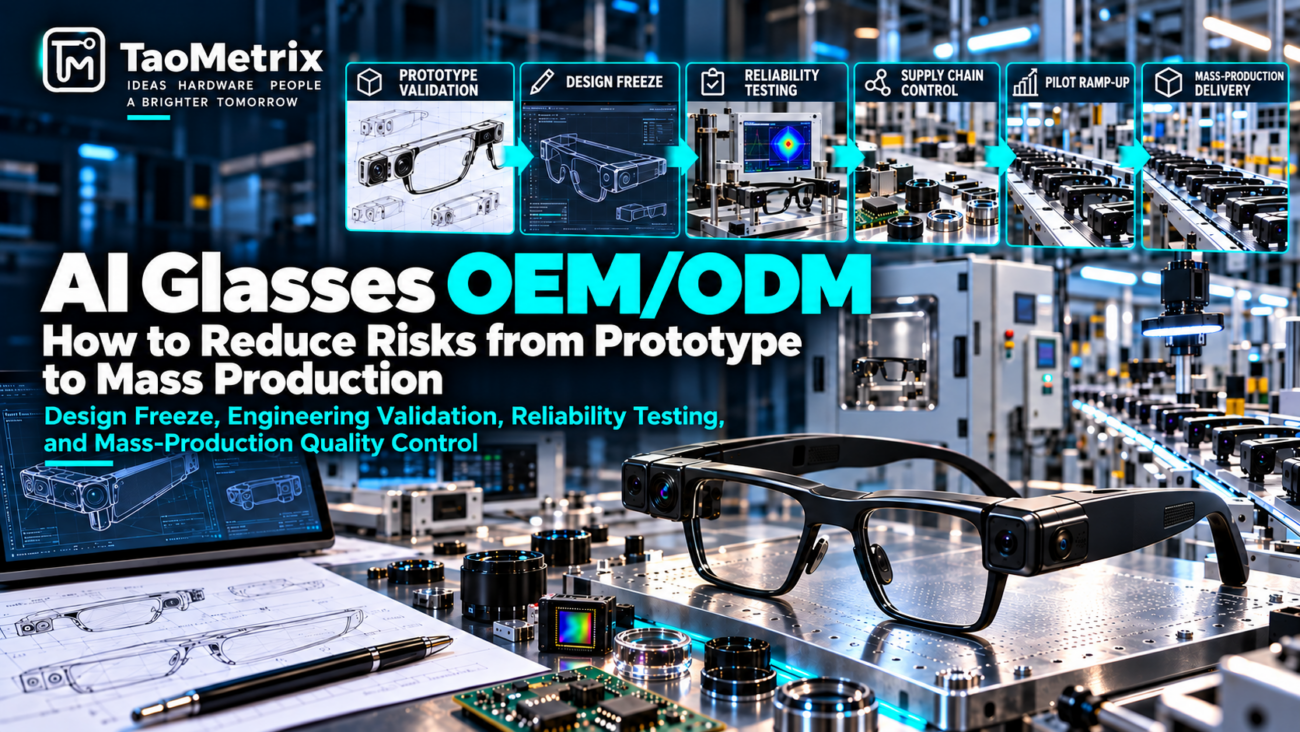
Step 6: Pilot Production
Pilot production is a small production run before regular mass manufacturing.
It helps customers evaluate:
- Assembly time
- Production yield
- Material readiness
- Testes funcionais
- Defect rates
- Work instructions
- Embalagem
- Delivery timing
- Unit cost
Moving directly from one prototype to a large production order can create significant risk. Pilot production provides useful manufacturing data before scaling.
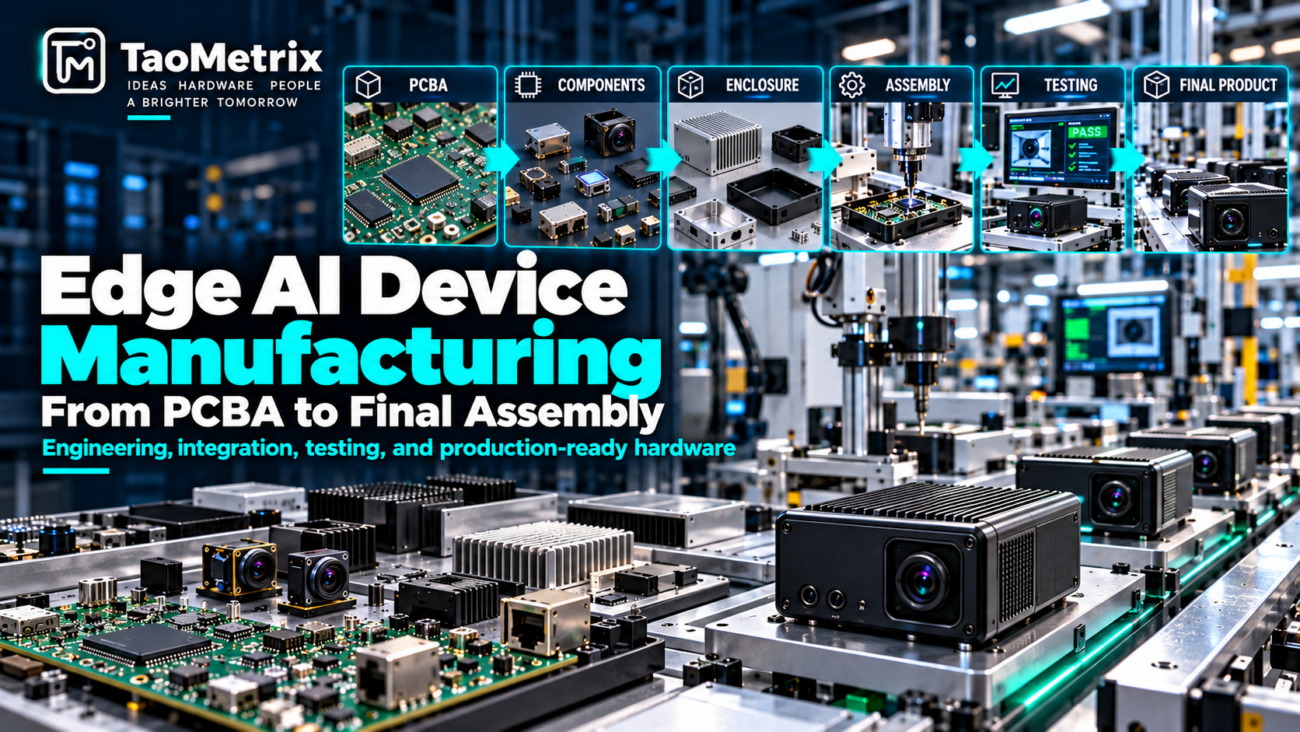
Step 7: Mass Production and Delivery
After the design, materials, testing process, and pilot results are approved, the product can move into regular production.
Production activities may include:
- Component purchasing
- SMT and PCBA assembly
- Firmware programming
- Testes funcionais
- Final product assembly
- Visual inspection
- Quality control
- Embalagem
- Logistics and delivery coordination
The final production plan depends on product complexity, order quantity, component availability, testing requirements, schedule, and target market.
How TaoMetrix Supports Custom AI Hardware Development
Depending on project requirements, TaoMetrix may support:
- Product feasibility evaluation
- Hardware architecture planning
- Schematic design
- PCB layout coordination
- Component selection
- PCBA assembly coordination
- Testes funcionais
- Hardware and firmware integration
- Mechanical and enclosure coordination
- Prototype development
- Produção-piloto
- Final product assembly
- Packaging coordination
- Quality control
- Supplier coordination
- Certification planning and laboratory coordination
Some engineering and manufacturing activities may be completed internally. Specialized processes such as PCB fabrication, SMT production, tooling, and injection molding may be coordinated through qualified manufacturing partners.
The exact scope should be confirmed after reviewing the product requirements, development stage, available files, quantity, schedule, and testing plan.
OEM, ODM, or Custom Development?
OEM
OEM is suitable when the customer already owns a complete product design.
The customer usually provides:
- Schematics
- Ficheiros de PCB
- BOM
- Firmware
- Mechanical files
- Test standards
The manufacturer mainly supports production, assembly, testing, packaging, and delivery.
ODM
ODM is suitable when the customer has a product direction but does not have a complete engineering design.
ODM support may include:
- Product architecture
- Hardware development
- Prototype design
- Firmware integration
- Mechanical coordination
- Testing
- Production preparation
Custom Development
Custom development is suitable for customers with a new product idea, early prototype, or special technical requirements.
The project usually begins with requirements clarification and feasibility evaluation before entering hardware engineering.
How to Choose a Custom AI Hardware Development Partner
Before selecting a manufacturer, ask:
- Does the company have experience with similar products?
- Can it support both prototypes and production?
- Which engineering functions are handled internally?
- Can it review schematics, PCB files, or a BOM?
- Can it provide PCBA and final assembly?
- How are functional and reliability tests performed?
- How are component shortages and substitutions managed?
- How are design changes documented?
- How is customer intellectual property protected?
- Can the company support certification planning?
- Does it support pilot production?
- What information is needed for an initial evaluation?
A suitable partner should explain not only what it can manufacture, but also how it will reduce development and production risk.
Perguntas Frequentes
What is custom AI hardware development?
Custom AI hardware development is the process of designing an AI-enabled product according to its required functions, performance, size, power consumption, cost, and manufacturing needs.
Can I start with only a product idea?
Yes. You can begin with a product description, function list, concept image, or development board for an initial review.
Can TaoMetrix develop a completely new AI hardware product?
TaoMetrix can evaluate custom AI hardware projects according to the product requirements, technical documentation, development stage, quantity, and schedule.
Does TaoMetrix support OEM and ODM?
TaoMetrix can evaluate OEM projects based on customer-owned designs, as well as ODM and custom development projects that require engineering and manufacturing coordination.
Does TaoMetrix support prototypes and pilot production?
Depending on the project scope, TaoMetrix may support prototype development, functional testing, PCBA assembly, pilot production, and final assembly.
How should I start a project?
Share the product functions, available materials, expected quantity, target schedule, and target market. TaoMetrix can then discuss the appropriate evaluation and development path.
Conclusão
Custom AI hardware development is more than designing a circuit board. It involves product definition, processor selection, sensor integration, power management, connectivity, firmware, mechanical design, testing, supply chain planning, and production validation.
If you want to turn an AI product idea into a reliable and manufacturable device, engineering and manufacturing decisions should be considered from the beginning.
TaoMetrix supports customers from product concept and feasibility evaluation through prototype development, testing, pilot production, and OEM/ODM manufacturing. This provides a clearer and more practical path from an early AI hardware idea to a production-ready product.