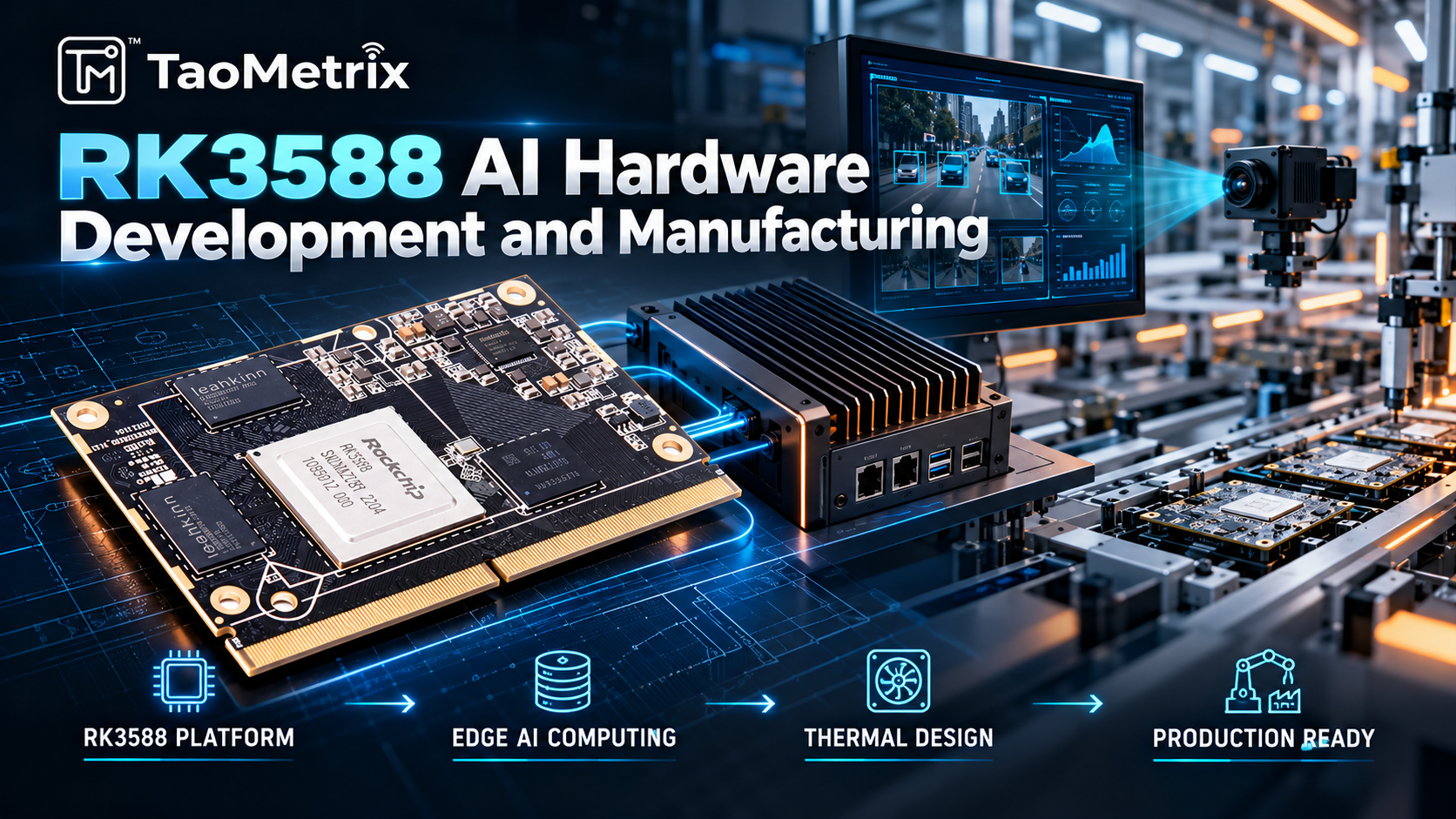
If you are developing an edge AI device, AI camera, robotics controller, or industrial smart terminal, RK3588 may be a platform worth evaluating.
RK3588 is often considered for AI hardware products that require local computing, visual processing, multiple interfaces, and strong system expansion. However, the processor alone does not solve the entire product development challenge.
Customers also need to plan memory, storage, power, thermal management, cameras, sensors, connectivity, firmware, mechanical design, testing, and production.
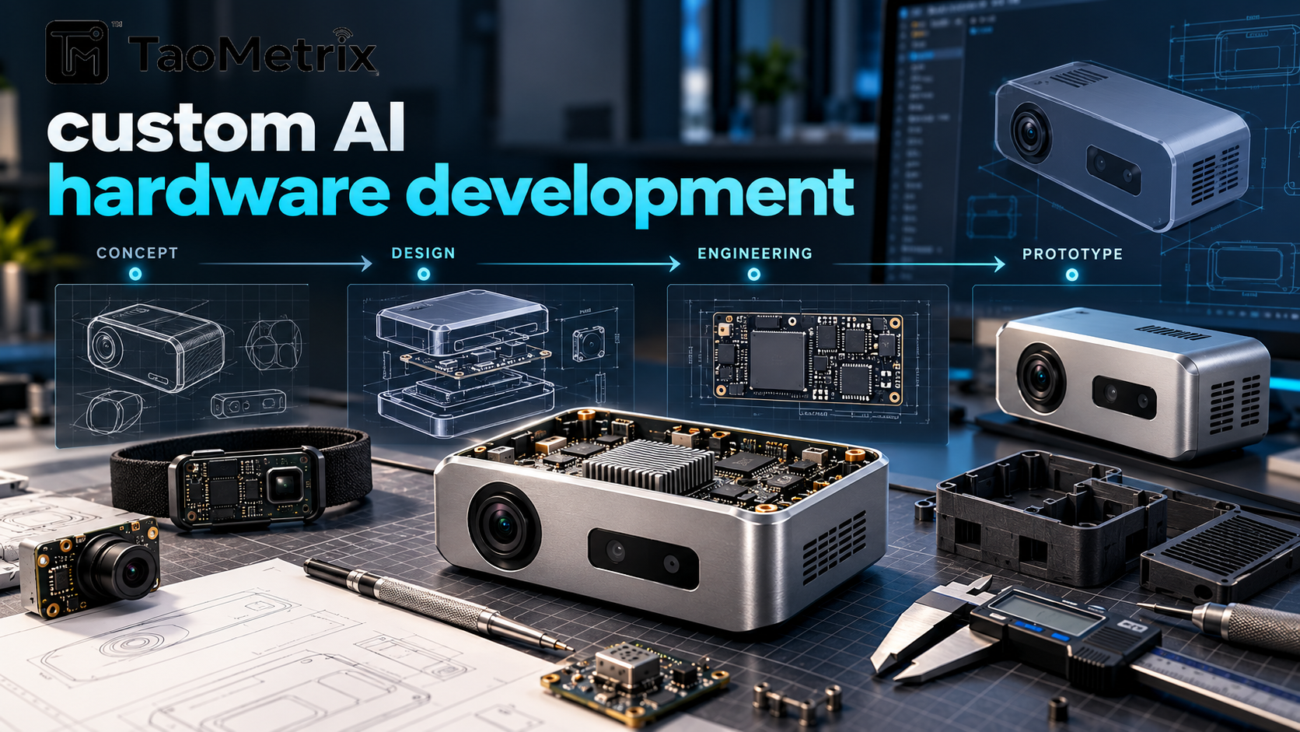
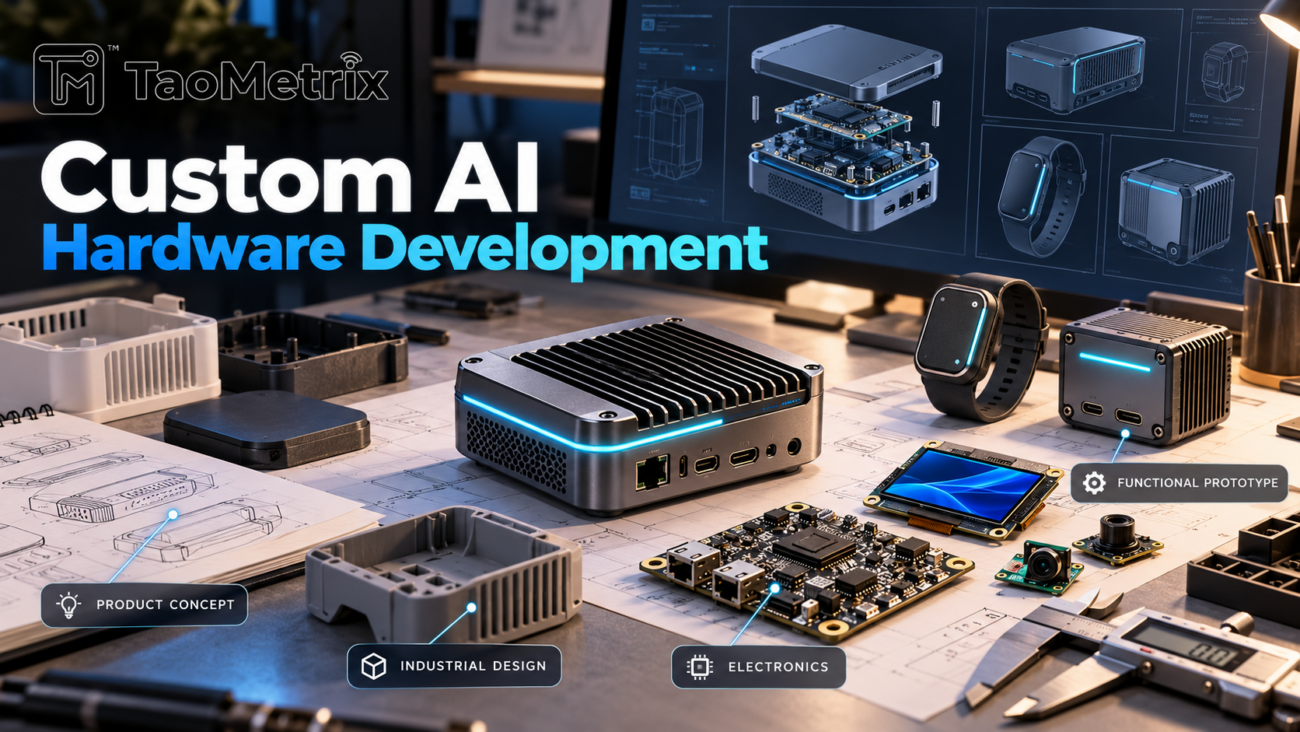
TaoMetrix helps customers evaluate RK3588-based hardware projects and supports the development process from hardware architecture and prototypes to PCBA, pilot production, and OEM/ODM manufacturing.
What Products Can Use RK3588 AI Hardware?
RK3588 may be evaluated for products such as:
- Edge AI computing terminals
- AI cameras
- Smart vision devices
- Robotics controllers
- Industrial inspection equipment
- Smart display terminals
- Multi-camera systems
- Edge gateways
- Smart retail devices
- Interactive terminals
- Education devices
- Industrial AI equipment
Whether RK3588 is suitable depends on the product’s AI workload, power requirements, size, cost target, interfaces, and expected production volume.
Why Do Customers Consider RK3588?
Local AI Processing
For products that require low latency, offline operation, or local data processing, local computing can reduce dependence on cloud connectivity.
This may be useful for:
- Real-time vision recognition
- Local object detection
- On-device data preprocessing
- Industrial site analysis
- Privacy-sensitive data processing
- Operation in unstable network environments
Vision and Multimedia Applications
AI cameras, robots, and visual terminals often need to process images, video, and sensor data. RK3588 can be evaluated as a hardware foundation for these applications.
Interface Expansion
Different products may need to connect:
- Cameras
- Displays
- Storage devices
- Network modules
- Датчики
- USB peripherals
- Industrial communication devices
- Audio components
The number, type, and layout of required interfaces should be defined during the hardware architecture stage.
Edge Computing Devices
For customers who do not want to send all raw data to the cloud, an edge AI device can process part of the information locally and send selected results or metadata to the cloud.
What Should Be Considered in an RK3588 Project?
1. AI Models and Computing Requirements
Before selecting an RK3588 solution, clarify:
- Which AI models will be used
- Whether the models must run locally
- Whether the input is image, video, voice, or sensor data
- Required response time
- Whether multiple models must run simultaneously
- Whether cloud AI is also required
- Whether the device must operate continuously
The processor should be selected according to the real workload, not only its headline specifications.
2. Memory and Storage
AI models, operating systems, applications, buffers, and recorded data all require memory and storage.
Plan for:
- Runtime memory
- Model size
- System storage
- Local data storage
- Logs and cache
- OTA update space
- Local video or image storage
If memory or storage is underestimated, the hardware may need to be redesigned later.
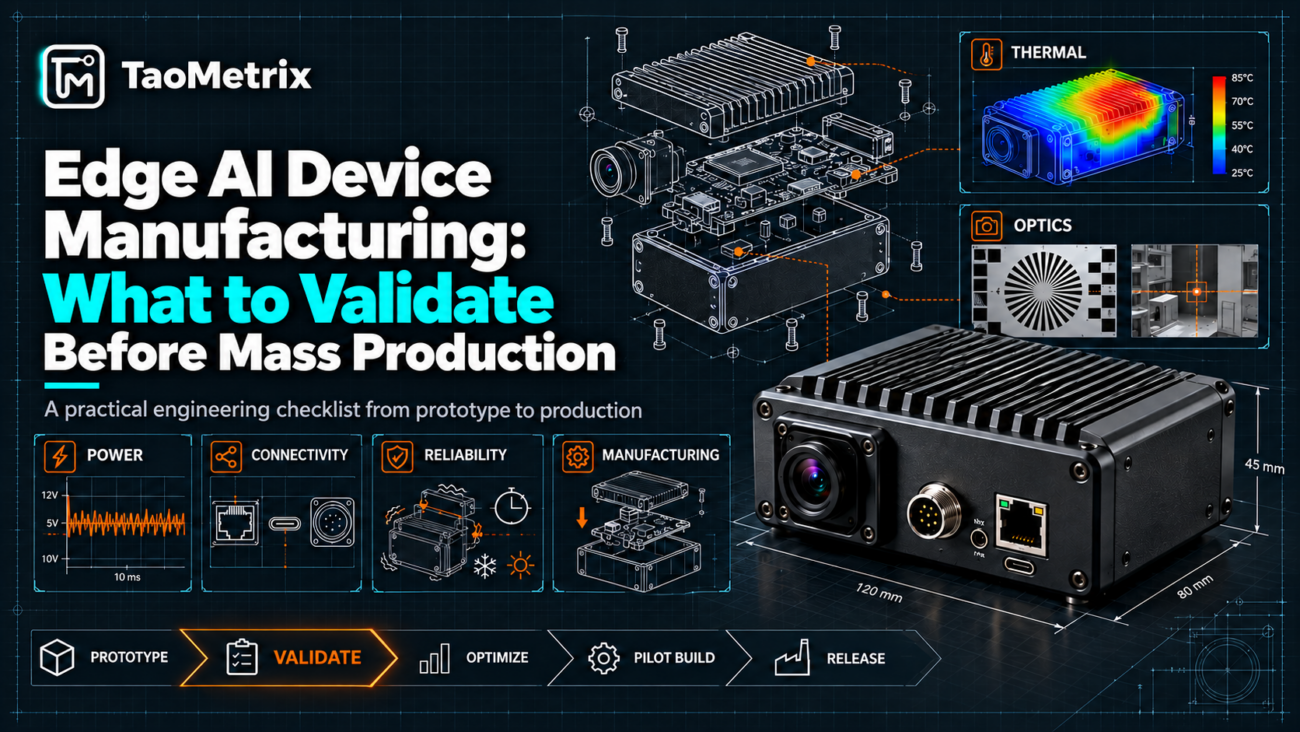
3. Thermal Design
Edge AI devices may generate significant heat during continuous operation.
Thermal design should consider:
- Processor workload
- AI inference time
- Number of cameras
- Enclosure material
- Active or passive cooling
- Operating temperature
- Installation direction
- Surface temperature requirements
Thermal performance should be tested in the final enclosure and under realistic workloads, not only on an open development board.
4. Power System
An RK3588 device requires a stable power design.
Evaluate:
- Input voltage
- Power management
- Peak power
- Standby power
- Adapter requirements
- Battery operation
- Startup behavior
- Restart behavior
- Long-term operating stability
An insufficient power system can cause unexpected restarts, data loss, or performance reduction.
5. Cameras and Sensors
For AI cameras and robotics products, define:
- Number of cameras
- Image resolution
- Frame rate
- Lens and enclosure requirements
- Sensor interface
- Lighting conditions
- Image processing workflow
- Sensor synchronization
Camera selection, PCB design, mechanical placement, and software drivers should be planned together.
6. System and Software Integration
Hardware development should also consider:
- Operating system
- Drivers
- AI inference framework
- Camera support
- Network connection
- OTA updates
- Logging
- Device security
- App or cloud APIs
If you already have software or AI models, provide the software environment and interface requirements early in the project.
The RK3588 AI Hardware Development Process
Step 1: Product Requirement Review
Confirm:
- Product category
- Target users
- AI functions
- Inputs and outputs
- Power requirements
- Size requirements
- Connectivity
- Production quantity
- Target market
Step 2: Hardware Architecture
Plan:
- RK3588-based architecture
- Memory and storage
- Cameras and sensors
- Power system
- Connectivity
- Display and audio
- Thermal solution
- Enclosure structure
Step 3: Schematic and PCB Development
Develop or review:
- Schematics
- PCB layout
- Power design
- Interface design
- High-speed signals
- Component selection
- Production test points
Step 4: Prototype Development
Use the prototype to check:
- System startup
- AI inference
- Camera operation
- Sensor functions
- Network connection
- Storage
- Thermal behavior
- Power stability
- Firmware and software integration
Step 5: Engineering Validation
Validation may include:
- Continuous operation
- High-load AI inference
- Long-duration video processing
- Temperature changes
- Network interruption recovery
- Peripheral compatibility
- System stability
Step 6: Pilot Production
Pilot production helps verify:
- PCB and PCBA
- Assembly procedures
- Production testing
- Production yield
- Material readiness
- Quality inspection
- Packaging
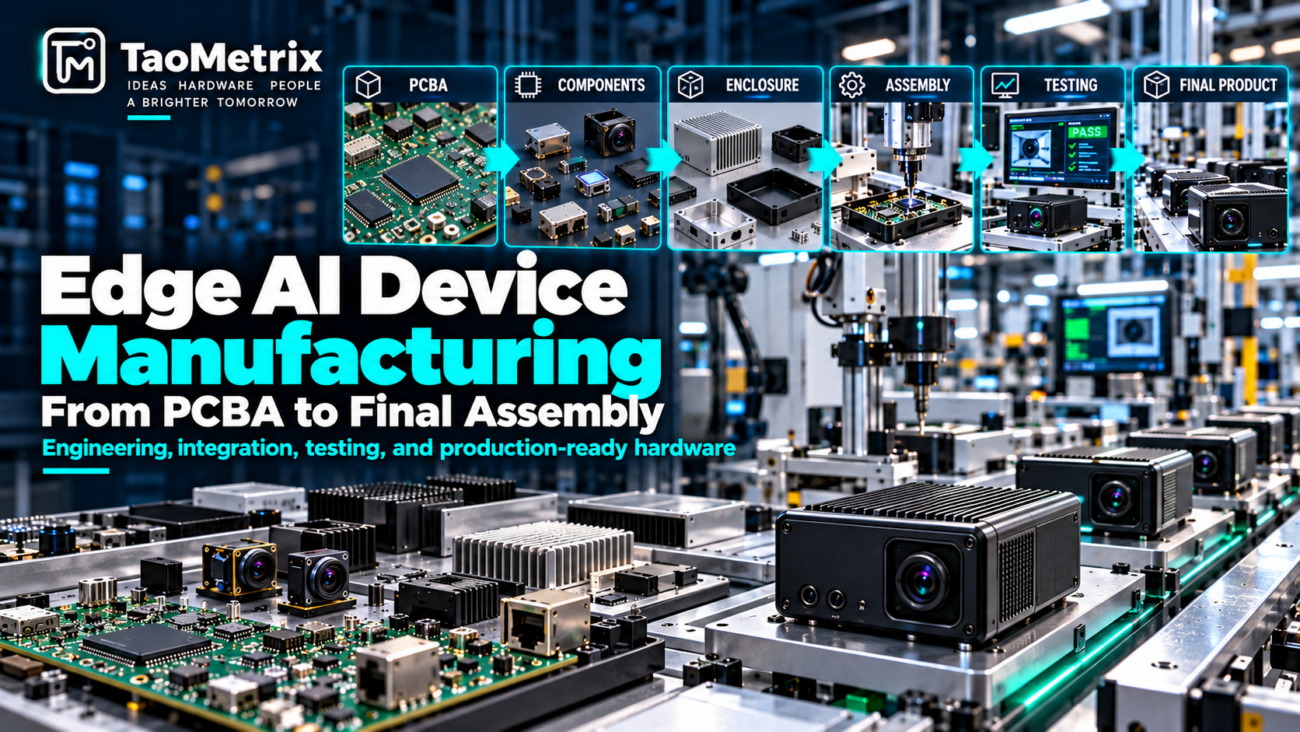
Step 7: Mass Production and Delivery
After the design, testing, and pilot results are approved, the project can move to:
- Material purchasing
- PCBA assembly
- Firmware programming
- Functional testing
- Final assembly
- Quality inspection
- Packaging
- Delivery
How TaoMetrix Supports RK3588 Projects
Depending on the project scope, TaoMetrix may support:
- RK3588 solution feasibility evaluation
- AI hardware architecture planning
- Memory and storage planning
- Camera and sensor integration
- Power and thermal evaluation
- Schematic and PCB coordination
- PCBA assembly
- Prototype development
- Functional testing
- System and firmware integration
- Mechanical assembly coordination
- Пробное производство
- Quality control
- Final product assembly
- Координация упаковки и доставки
- OEM/ODM manufacturing
Specialized processes such as PCB fabrication, SMT, tooling, and injection molding may be coordinated through qualified manufacturing partners when required.
The final scope should be confirmed according to the customer’s design files, AI models, quantity, schedule, and testing requirements.
What Should Customers Prepare?
Before starting an RK3588 AI hardware project, prepare:
- Product description
- Main AI functions
- AI model or software information
- Camera and sensor requirements
- Memory and storage requirements
- Power and thermal targets
- Product dimensions
- Existing development board or prototype
- Schematics and PCB files
- BOM
- Prototype quantity
- Expected production quantity
- Target launch date
- Target market
- Certification requirements
Часто задаваемые вопросы
Is RK3588 suitable for every AI hardware product?
Not necessarily. Suitability depends on the AI workload, power consumption, product size, interfaces, cost target, and expected production volume.
Can RK3588 be used for AI cameras?
RK3588 can be evaluated for AI cameras and edge vision devices. The final solution also needs to consider camera quantity, image processing, thermal management, storage, and target cost.
Is RK3588 suitable for robotics products?
It can be evaluated for robotics controllers, vision modules, or edge computing units. The actual design depends on motor control, sensors, cameras, and communication requirements.
Can TaoMetrix support RK3588 prototype development?
TaoMetrix can evaluate RK3588-related prototype, PCBA, testing, and production support according to the project requirements and approved development scope.
How should I start an RK3588 project?
Share the product functions, AI model, development board, target quantity, product dimensions, and schedule. TaoMetrix can then discuss the hardware architecture and next development step.
Заключение
RK3588 can be considered for edge AI, vision systems, robotics, and smart terminal products, but project success depends on more than the processor.
Customers also need to plan:
- AI models
- Memory and storage
- Cameras and sensors
- Power
- Thermal management
- System software
- PCB and PCBA
- Testing
- Пробное производство
- Mass manufacturing
- Delivery
TaoMetrix helps customers evaluate RK3588-based solutions and move from hardware development and prototype validation to PCBA, pilot production, quality control, and OEM/ODM manufacturing.