Looking to Develop AI Glasses? How to Choose the Right OEM/ODM Partner | TaoMetrix
ou may already have an AI glasses concept, an industrial design or an early engineering prototype. The next challenge is turning that idea into a reliable product that can be tested, manufactured and delivered consistently.
Before choosing an AI glasses OEM/ODM partner, product teams should answer several important questions:
- Is the design suitable for manufacturing?
- Can the battery meet the target runtime?
- Can the camera and microphone be installed consistently?
- Is the product comfortable enough for daily wear?
- Can the design support small-batch production?
- Are components available and traceable?
- Can the manufacturer support engineering changes?
The right partner should do more than assemble components. It should help identify risks early and provide a practical path from prototype to production.
Should You Choose OEM or ODM?
OEM Manufacturing
OEM is suitable when you already have a mature product design and complete production documentation.
Typical materials include:
- Product specifications
- Mechanical drawings
- PCB and Gerber files
- Bill of materials
- Firmware requirements
- Testing standards
- Packaging files
The manufacturer usually supports sourcing, PCBA assembly, final assembly, firmware loading, functional testing, quality inspection and delivery.
ODM Development
ODM is suitable when you have a product concept but need engineering and manufacturing support.
An ODM project may include hardware-platform selection, camera and sensor integration, battery design, flexible PCBA layout, mechanical adaptation, prototype development, DFM review and pilot production.
ODM can be useful for startups and product teams that do not yet have a complete internal engineering team.
Can Your AI Glasses Design Be Manufactured?
AI glasses combine cameras, microphones, speakers, batteries, wireless modules, PCBA and mechanical components in a very limited space.
Common risks include:
- Insufficient space inside the temples
- Excessive product weight
- Poor cable routing
- Camera-alignment errors
- Weak microphone performance
- Battery overheating
- Difficult assembly procedures
- Unclear testing standards
These issues should be evaluated before mass production.
Key Engineering Areas
Battery and Runtime
Battery capacity must be balanced against product weight, charging speed, thermal performance and available frame space.
Camera Integration
Camera performance depends on sensor selection, lens position, installation angle, enclosure tolerances and calibration.
Audio Performance
Microphones and speakers should be tested for voice pickup, wind noise, echo cancellation, speaker volume, audio leakage and Bluetooth stability.
Mechanical Reliability
Frames, temples, hinges and connectors must withstand repeated opening, closing, wearing, transport and daily handling.
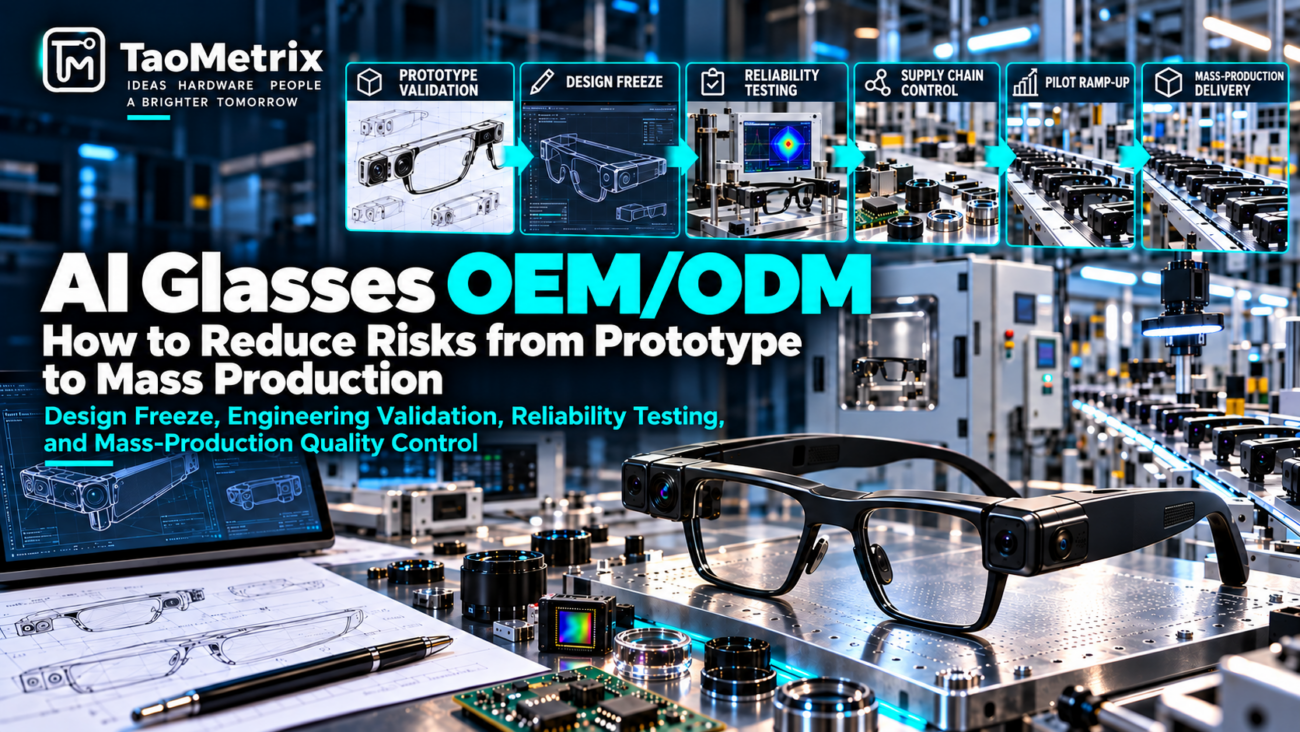
From Prototype to Production
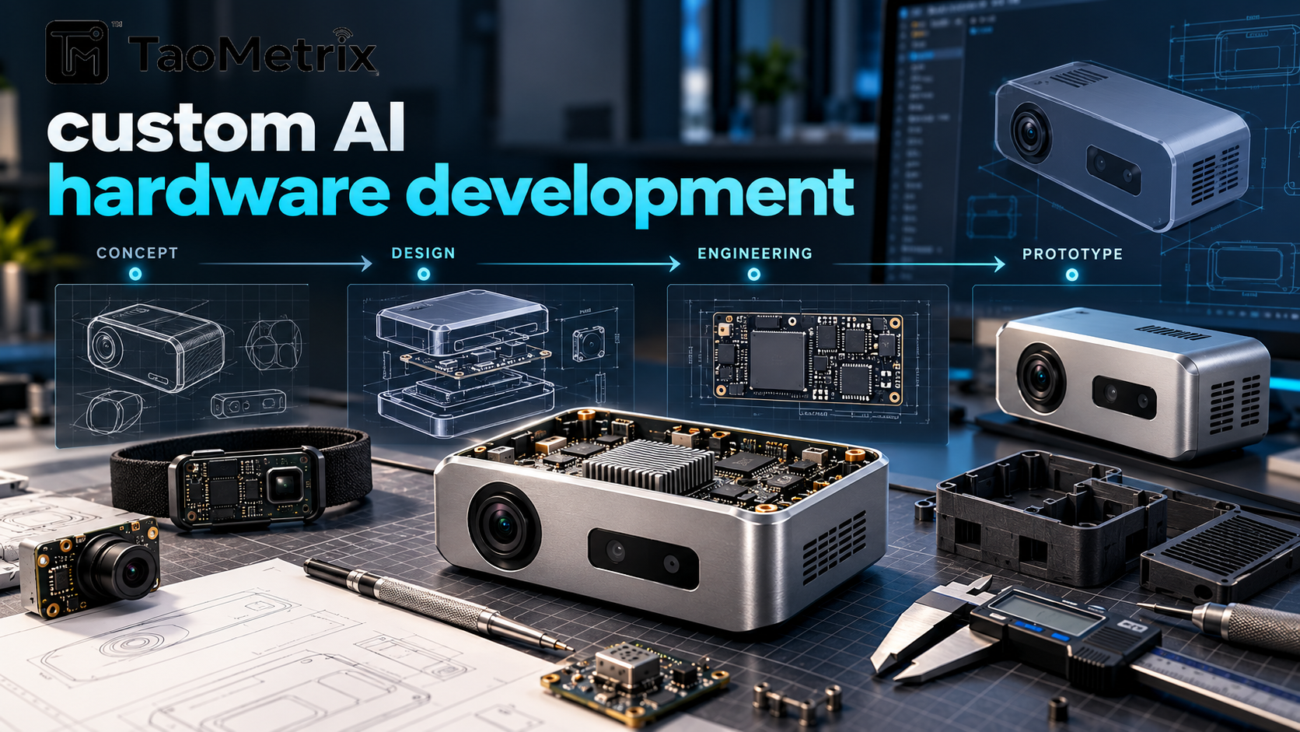
A practical development process may include:
- Product requirements review
- Engineering feasibility assessment
- Hardware and mechanical integration
- Component and supply-chain evaluation
- Engineering prototype development
- Functional and user testing
- DFM review
- Small-batch pilot production
- Quality and reliability validation
- OEM/ODM production launch
Pilot production is important because it verifies whether the product can be assembled and tested consistently across multiple units.
How TaoMetrix Supports Your Project
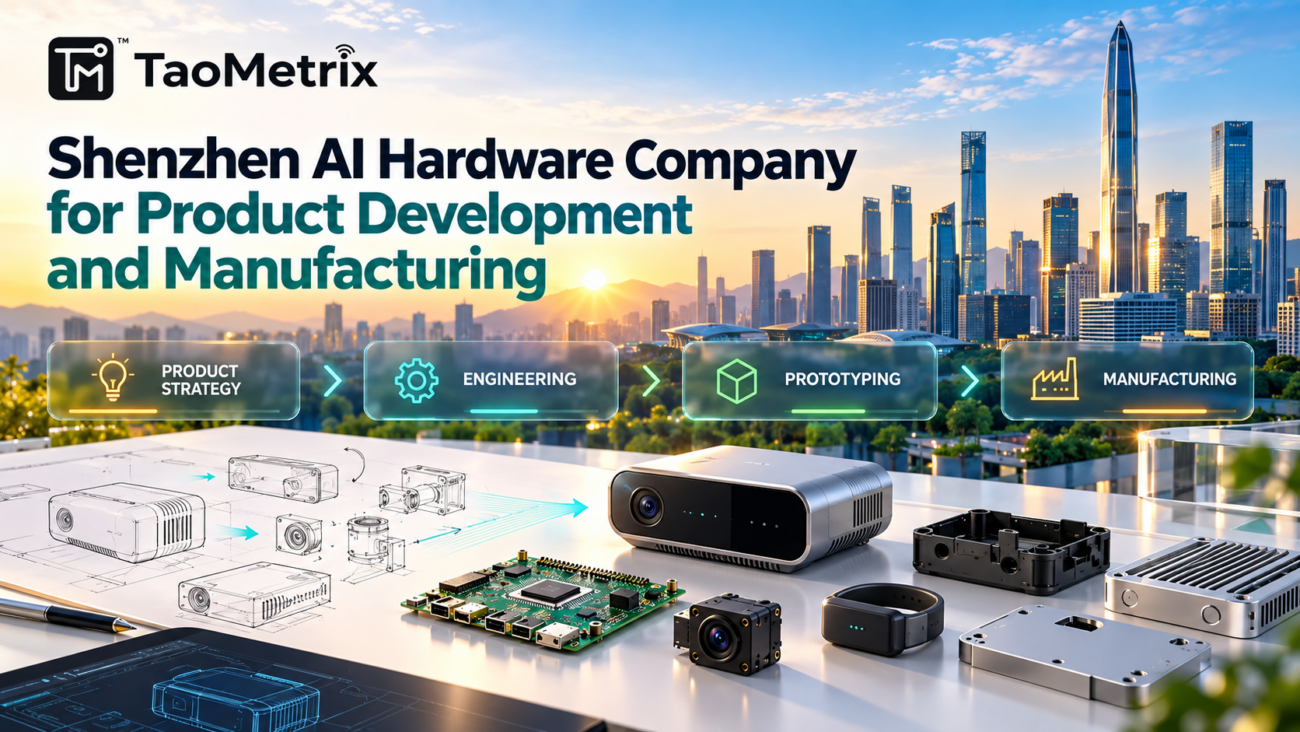
TaoMetrix is a Shenzhen-based AI hardware development and manufacturing partner.
Depending on project requirements, TaoMetrix may support:
- PCB and SMT assembly
- Camera and sensor integration
- Microphone and speaker integration
- Battery and charging-system assembly
- Wireless-module integration
- Flexible PCBA assembly
- Mechanical and enclosure assembly
- Firmware loading
- Functional and interface testing
- DFM review
- Engineering prototypes
- Pilotproduktion
- OEM, ODM and JDM manufacturing
- Quality inspection
- Packaging and delivery coordination
TaoMetrix also supports AI cameras, robotics hardware, smart devices and other connected AI products.
What Should You Prepare?
Before contacting an AI glasses OEM/ODM partner, prepare:
- Product overview
- Target users
- Main functions
- Reference products
- Target size and weight
- Camera and audio requirements
- Battery and runtime expectations
- Expected production quantity
- Target markets
- Certification requirements
- Current development stage
- Available BOM, CAD, Gerber or specification files
- Existing prototypes or reference samples
Confidential design files, source code and intellectual property can be reviewed under an appropriate NDA.
Questions to Ask an OEM/ODM Partner
- Do you have experience with wearable electronics?
- Can you handle compact PCBA and flexible circuits?
- Can you integrate cameras, audio, wireless modules and batteries?
- Do you support engineering prototypes?
- Do you support pilot production?
- Can you participate in DFM reviews?
- Are functional tests clearly defined?
- Can you manage BOM and engineering revisions?
- How will confidential information be protected?
- Are OEM, ODM and joint-development responsibilities clear?
Fazit
Developing AI glasses requires more than selecting a reference design and adding a brand logo.
A production-ready product must balance electronics, structure, audio, cameras, wireless communication, battery life, comfort and manufacturing consistency.
TaoMetrix helps global startups, product teams and hardware brands move AI glasses projects from product concept and engineering prototypes to DFM review, pilot production and OEM/ODM manufacturing.
If you are developing AI glasses, share your product functions, target quantity, development stage and available design files with TaoMetrix to discuss the next practical step.
Contact TaoMetrix to discuss your AI glasses OEM/ODM project.