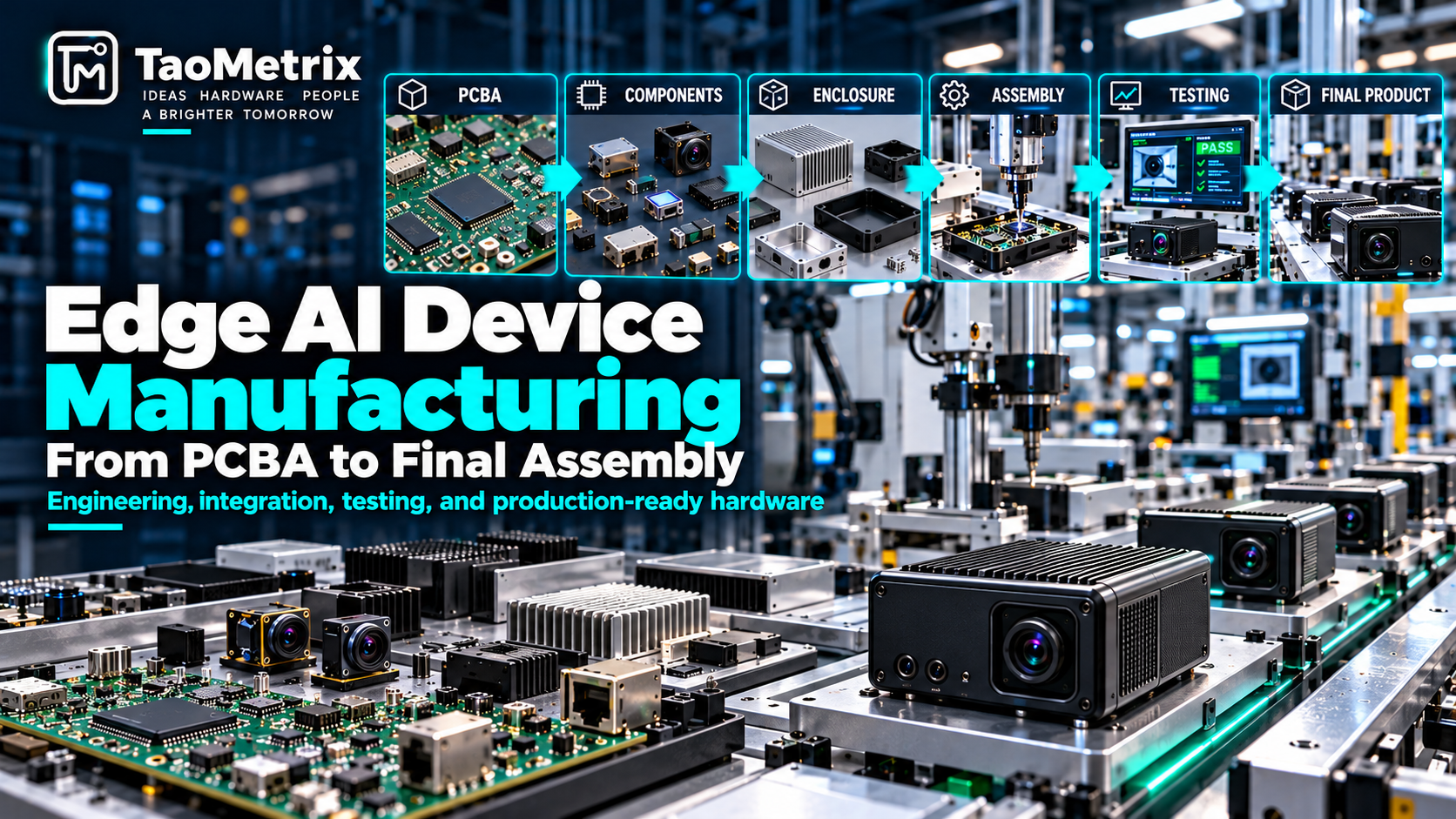
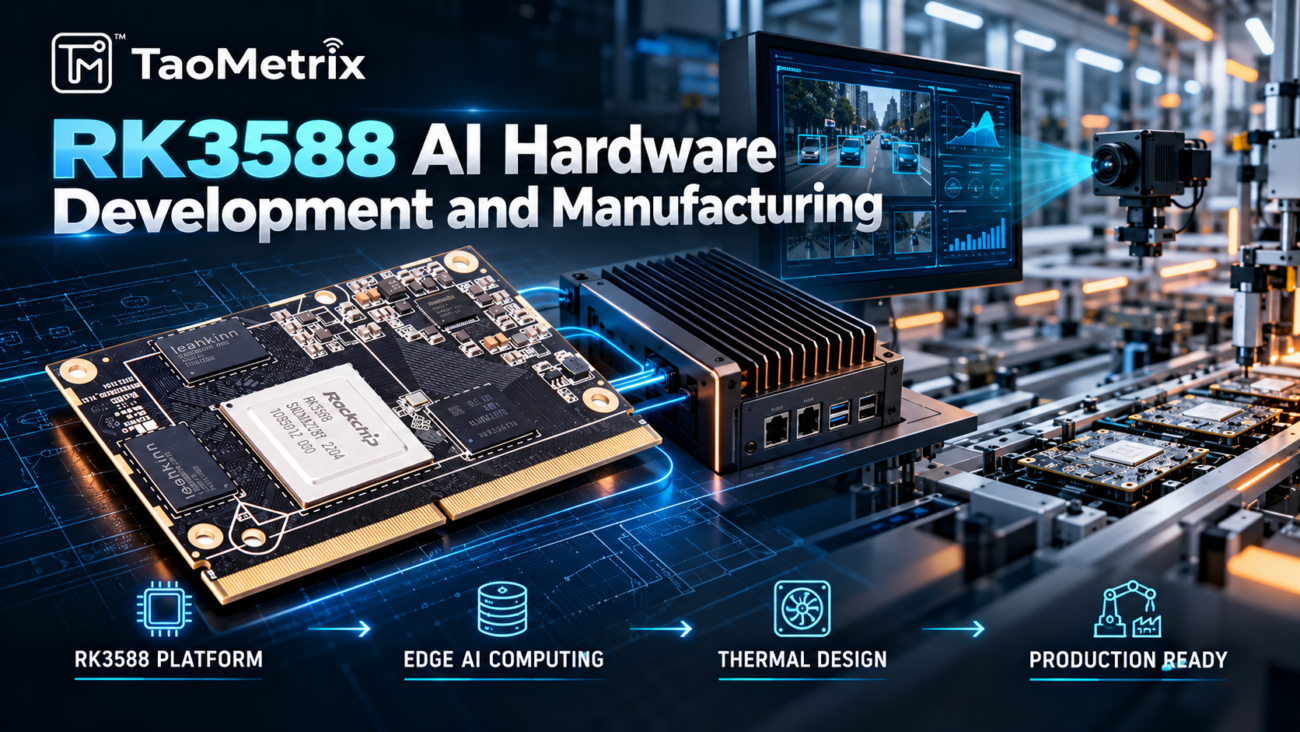
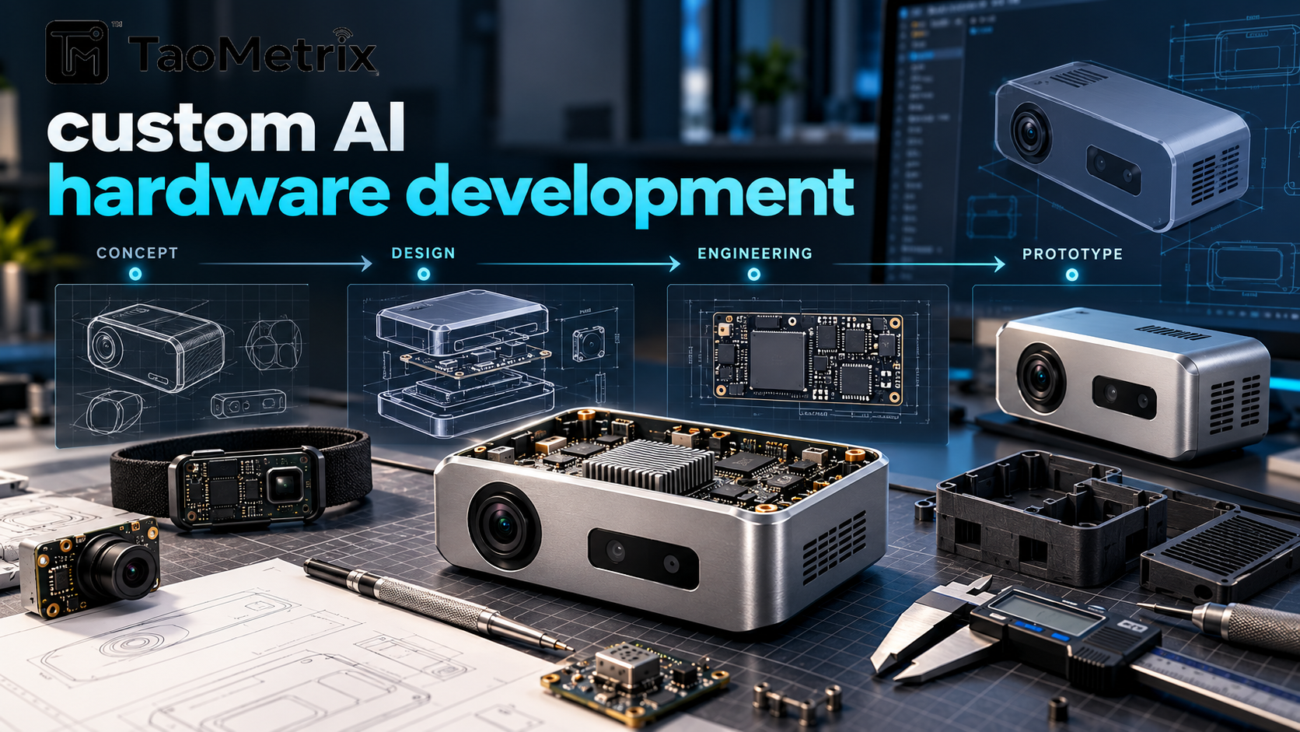
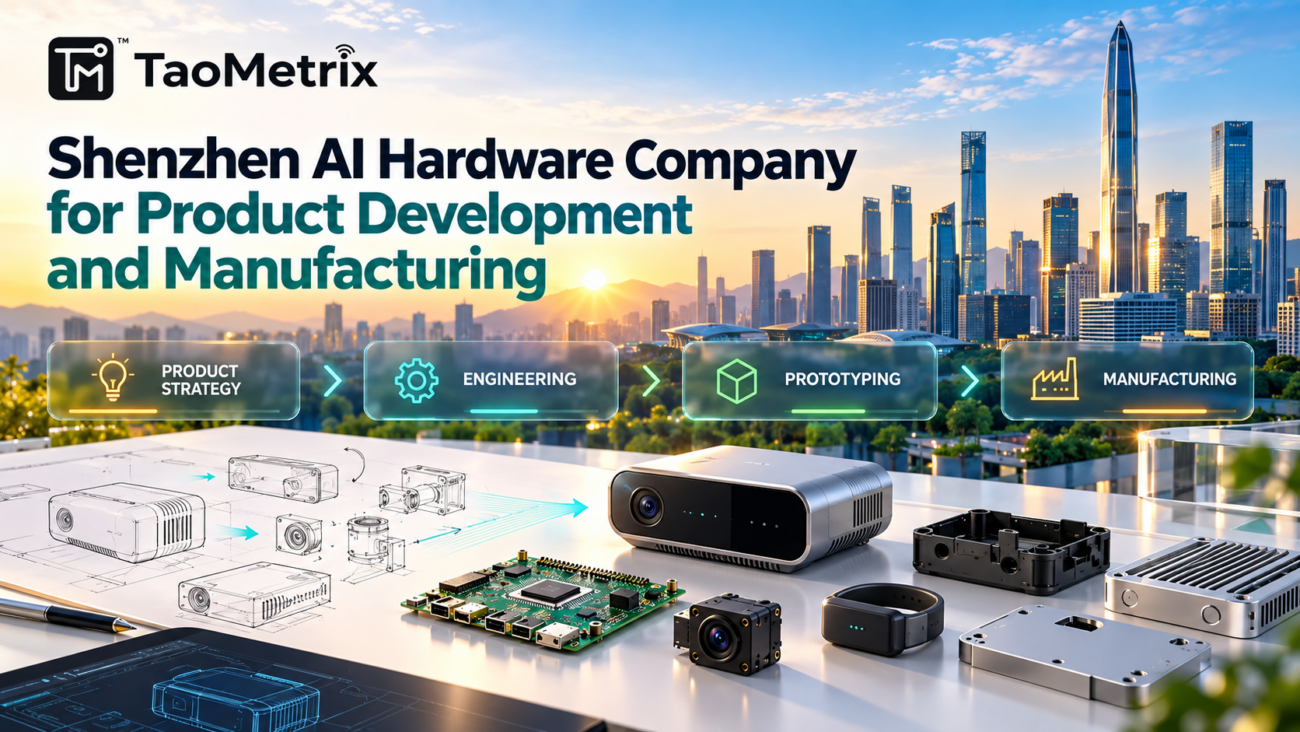
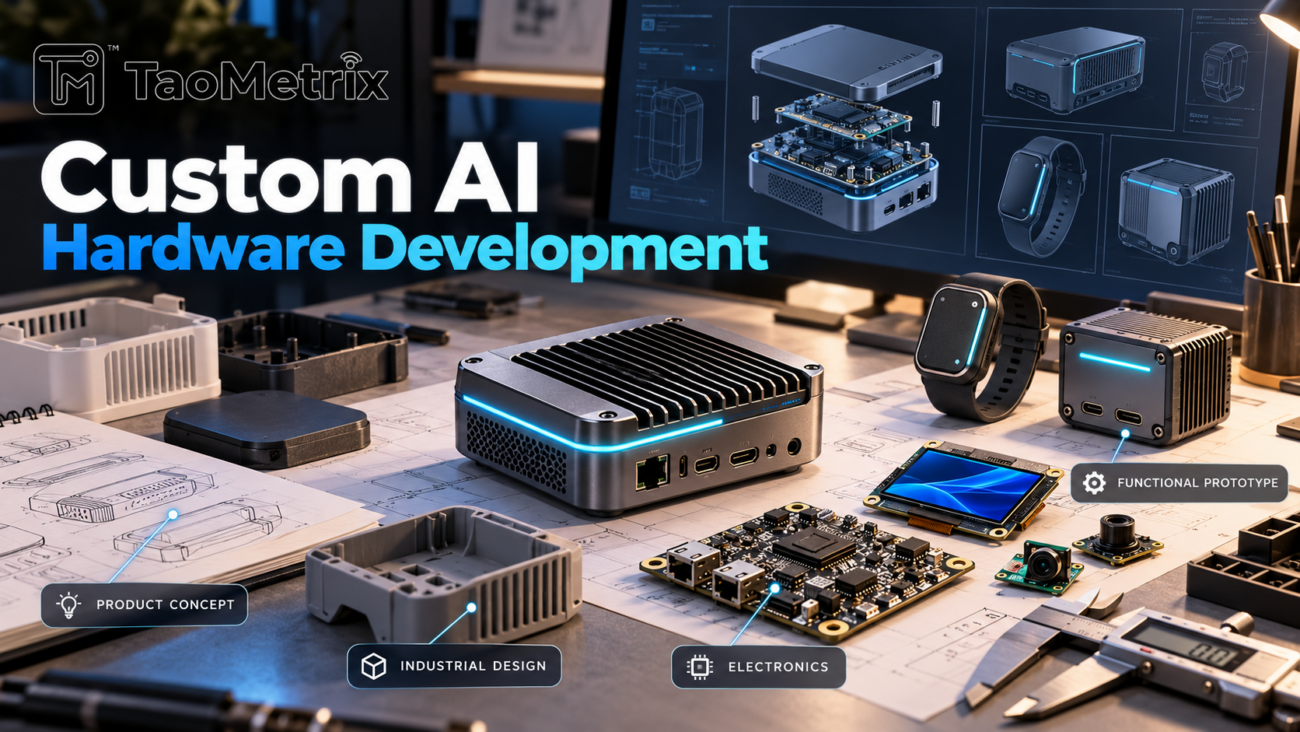
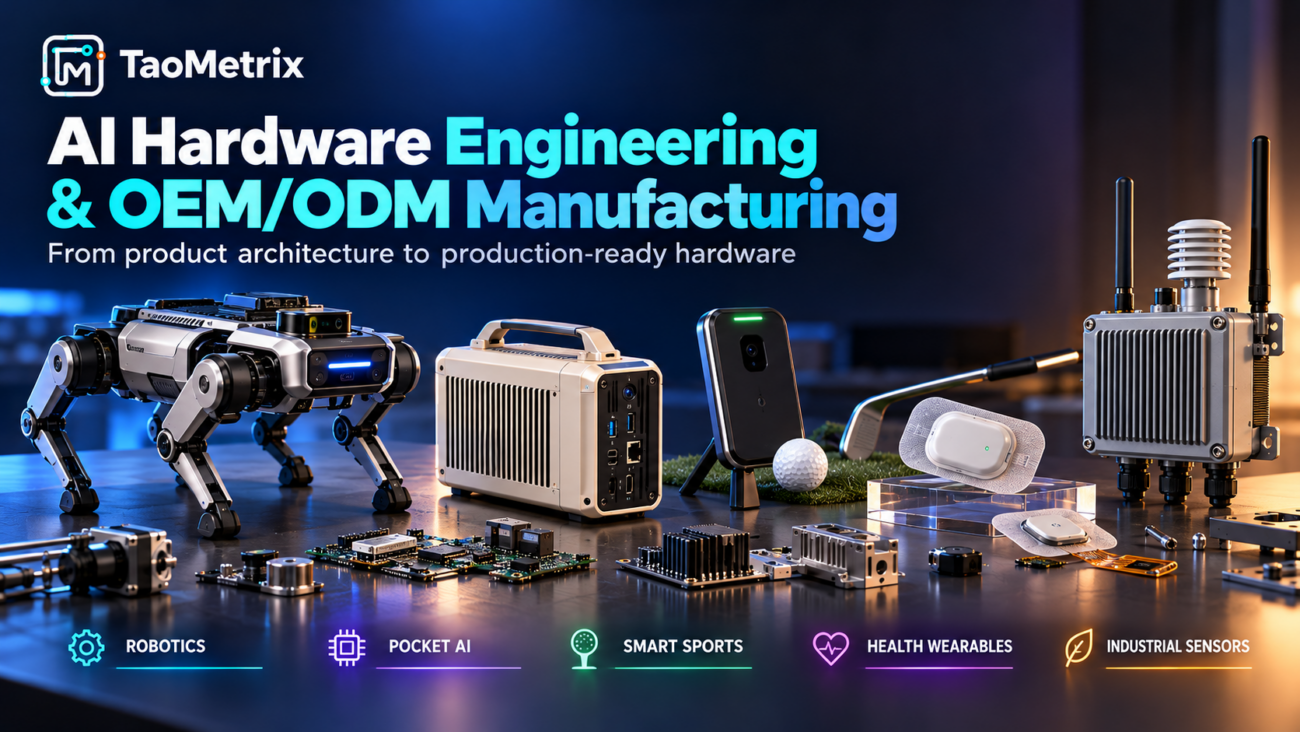
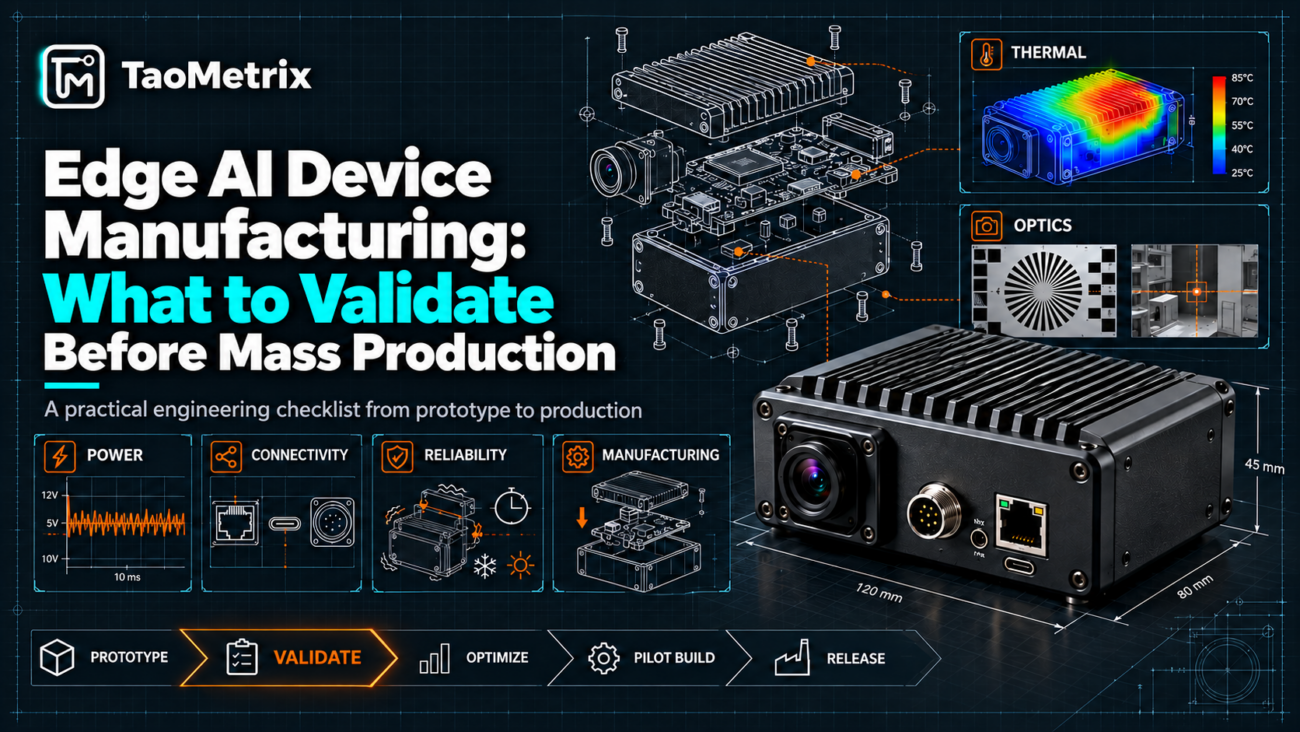
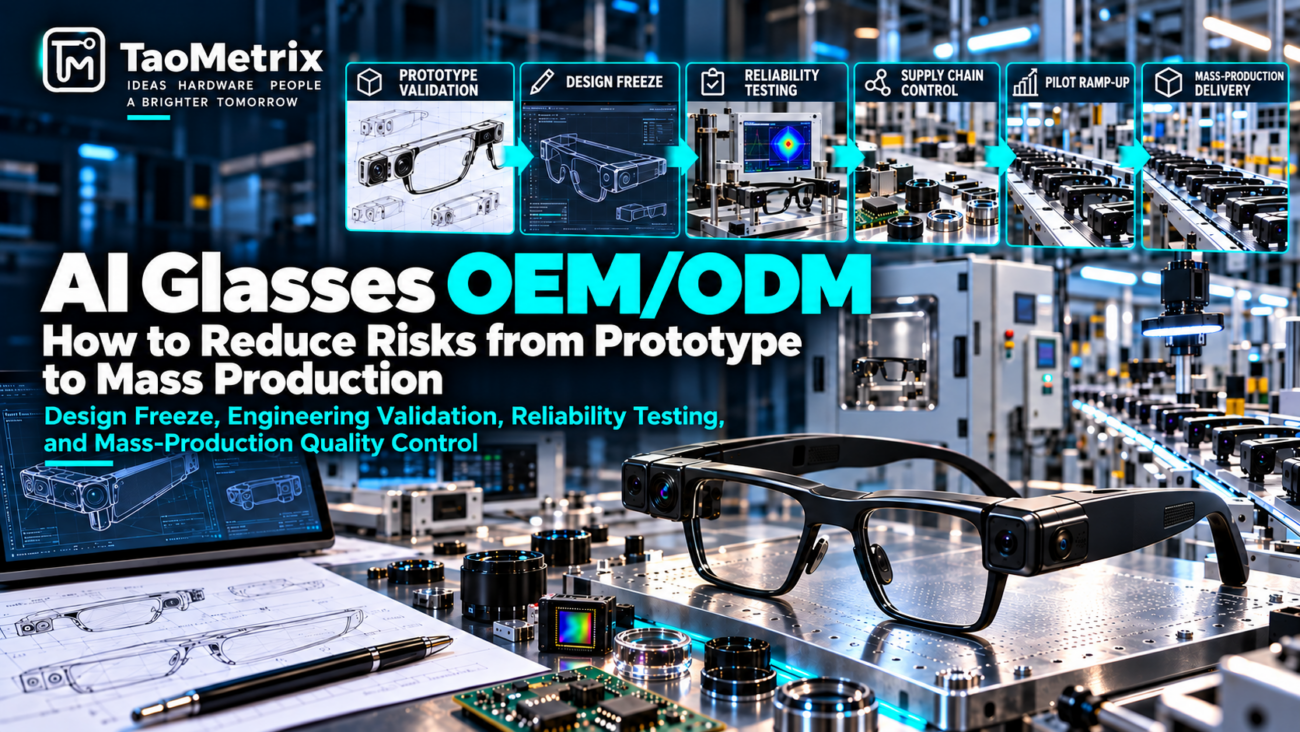
Edge AI Device Manufacturing involves much more than placing a PCBA inside an enclosure. It requires the integration of computing modules, sensors, power systems, thermal structures, firmware, testing, and final assembly into a product that can operate reliably and be manufactured repeatedly.
Edge AI devices are increasingly used in factories, warehouses, retail stores, transportation systems, security applications, robots, and smart-home environments. These products perform part of their data processing and AI inference close to where the data is generated.
This can reduce cloud dependence, lower response latency, improve privacy, and support applications that require stable local operation.
What Is Edge AI Device Manufacturing?
Edge AI device manufacturing is the process of turning an AI-enabled hardware design into a production-ready product.
Typical edge AI devices include:
- AI cameras;
- Industrial vision terminals;
- Edge AI boxes;
- Local AI computers;
- Smart gateways;
- Robotic vision modules;
- AI development boards;
- Smart retail terminals;
- Vehicle vision devices;
- Security and inspection systems.
Unlike conventional electronic products, edge AI devices often combine computing, sensors, networking, thermal management, software configuration, and AI functions in one system.
What Does Edge AI Device Manufacturing Include?
A complete Edge AI Device Manufacturing project may include:
- Product and hardware-platform evaluation;
- PCB and PCBA assembly;
- Computing-module integration;
- Camera and sensor integration;
- Power and battery-system assembly;
- Thermal and mechanical design;
- Firmware loading and system configuration;
- Functional and interface testing;
- DFM and DFT review;
- Pilot production;
- Final assembly, packaging, and delivery.
These stages should be coordinated across engineering, procurement, quality control, and production teams.
1. Product Requirements and Hardware Evaluation
Before manufacturing begins, customers should define:
- The primary application;
- Target users;
- Data types processed by the device;
- Whether local AI inference is required;
- Whether cloud services are needed;
- Target computing performance;
- Target power consumption;
- Battery requirements;
- Wireless connectivity;
- Installation environment;
- Expected production volume.
Different applications require different design priorities.
Industrial vision devices may require continuous operation, multiple interfaces, and strong thermal performance. Portable AI devices may prioritize weight, battery life, and compact size. Smart cameras may focus on image quality, networking, enclosure protection, and remote deployment.
2. PCB and PCBA Assembly
PCBA is one of the most important parts of an edge AI device.
The PCBA process may include:
- PCB file review;
- BOM verification;
- SMT placement;
- DIP insertion;
- Soldering and rework;
- Component inspection;
- Electrical testing;
- Firmware-loading preparation.
An AI device PCBA may integrate:
- Main processors;
- NPU or AI accelerators;
- Memory and storage;
- Power-management components;
- Wireless communication;
- Camera interfaces;
- Sensor interfaces;
- Display or audio interfaces;
- Fan and temperature-sensor interfaces.
PCBA problems can directly affect system startup, AI inference, wireless communication, and long-duration operation.
Customers should confirm whether the manufacturer can manage BOM revisions, component substitutions, soldering quality, and test records.
3. Computing-Module and Sensor Integration
An edge AI device usually includes multiple modules rather than one mainboard.
Common modules include:
- AI computing modules;
- Camera modules;
- Microphones;
- Temperature sensors;
- Distance sensors;
- Network modules;
- Storage modules;
- Power modules;
- Display modules;
- Motor or actuator interfaces.
During integration, the engineering team should verify:
- Interface compatibility;
- Power requirements;
- Cable routing;
- Connector security;
- Signal interference;
- Sensor positioning;
- Installation and maintenance access.
Standardized module integration helps reduce performance differences between production units.
4. Power and Thermal Management
Many edge AI devices operate continuously, making power and thermal design essential.
The engineering team may need to evaluate:
- Processor power consumption;
- AI-module power requirements;
- Input voltage;
- Power-adapter specifications;
- Battery capacity;
- Charging management;
- Peak power;
- Standby power;
- Fan or passive cooling;
- Heat sinks and thermal materials;
- Internal airflow.
If the thermal path is inadequate, a device may experience:
- Performance throttling;
- System restarts;
- Slower AI inference;
- Excessive enclosure temperature;
- Reduced component life;
- Unstable long-duration operation.
Power-consumption, temperature-rise, and long-duration tests should be included before pilot production.
5. Mechanical Design and Final Assembly
Mechanical design affects the appearance, cooling, assembly, maintenance, and environmental protection of the product.
The enclosure may need to accommodate:
- PCBA mounting;
- Computing modules;
- Camera and sensor positions;
- Interface openings;
- Cable routing;
- Fans and airflow;
- Screws and clips;
- Dust protection;
- Installation requirements;
- Maintenance access.
Before production, a DFM review should confirm:
- Whether parts are easy to manufacture;
- Whether the assembly sequence is practical;
- Whether dedicated fixtures are needed;
- Whether critical dimensions are defined;
- Whether appearance standards are clear;
- Whether operators can repeat the assembly process.
6. Firmware Loading and System Configuration
Edge AI devices often require software configuration before shipment.
This may include:
- Firmware loading;
- Operating-system installation;
- AI-model deployment;
- Serial-number programming;
- Network configuration;
- Storage initialization;
- Sensor calibration;
- Version verification;
- Factory-reset testing.
A standardized factory-configuration process can reduce installation and commissioning time at the customer site.
7. Functional and AI Testing
The test plan should reflect the product application and target market.
Basic Functional Testing
- Power-on and shutdown;
- Interfaces;
- Buttons;
- Storage;
- Network connectivity;
- Power input;
- Fan operation;
- Status indicators.
AI Function Testing
- Camera image quality;
- Object recognition;
- Local inference;
- Model loading;
- Sensor data;
- Voice or visual input;
- Output results;
- API or application connectivity.
Stability Testing
- Long-duration operation;
- Temperature rise;
- Network reconnection;
- Repeated power cycles;
- Recovery after power interruption;
- Storage read and write;
- Environmental temperature changes;
- Continuous inference loads.
Test records should include the software version, test conditions, pass criteria, and corrective actions.
8. DFM, DFT, and Pilot-Production Preparation
DFM helps confirm that the product is suitable for manufacturing. DFT helps ensure that the product can be tested efficiently.
The team may need to define:
- Test points;
- Firmware-loading interfaces;
- Sensor-calibration procedures;
- Current and voltage measurements;
- Camera tests;
- Wireless tests;
- AI-function tests;
- Automated test fixtures;
- Production SOPs;
- Test SOPs;
- Inspection standards;
- Defect-handling procedures.
These documents should be completed before pilot production begins.
9. Pilot Production
Pilot production verifies whether the product and process can be repeated consistently.
Customers should review:
- PCBA yield;
- Final-assembly yield;
- Production time;
- Testing time;
- Component availability;
- Firmware and software versions;
- Temperature and power results;
- Appearance consistency;
- Packaging completeness;
- Rework and repair procedures.
If pilot-production results are unstable, the product should be reviewed before high-volume production.
10. Final Assembly and Delivery
Final assembly may include:
- PCBA installation;
- Computing-module installation;
- Camera and sensor installation;
- Power and battery installation;
- Enclosure assembly;
- Firmware loading;
- Functional testing;
- Appearance inspection;
- Serial-number labeling;
- Packaging;
- Pre-shipment inspection.
Clear inspection standards help maintain consistency between different production batches.
How Should Customers Choose an Edge AI Manufacturer?
Customers should ask:
- Does the manufacturer have experience with AI devices or complex electronics?
- Can it complete PCBA and final assembly?
- Can it integrate cameras, sensors, and computing modules?
- Can it perform power and thermal testing?
- Does it support prototypes and pilot production?
- Can it conduct DFM and DFT reviews?
- Can it load firmware and configure systems?
- Are functional test standards clearly defined?
- Can it manage BOMs and engineering revisions?
- Can it handle component changes?
- Can it provide pilot-production data?
- Does it support OEM, ODM, or joint development?
- Can it coordinate packaging and delivery?
- Can it protect customer design information?
Customers should evaluate more than the PCBA price. Final assembly, testing, component management, and production stability are also important.
How TaoMetrix Supports Edge AI Device Manufacturing
TaoMetrix can discuss manufacturing support according to the customer’s product stage, design information, expected volume, and target market.
Potential support areas include:
- Product and hardware-platform review;
- PCB and PCBA assembly;
- SMT and DIP assembly;
- AI computing-module integration;
- Camera and sensor integration;
- Battery and power-system assembly;
- Thermal and enclosure assembly;
- Firmware loading;
- System configuration;
- Power-consumption and temperature-rise testing;
- Functional and interface testing;
- DFM and DFT review;
- Engineering prototypes;
- Pilot production;
- OEM manufacturing;
- ODM support;
- Final assembly;
- Packaging and delivery coordination.
The actual scope, cost, lead time, and certification requirements should be evaluated according to the product design, expected volume, target market, and testing requirements.
What Information Should Customers Prepare?
Customers can prepare:
- Product requirements;
- Target application;
- AI computing platform;
- Main processor and module information;
- Camera and sensor requirements;
- Product dimensions;
- Power and thermal requirements;
- BOM;
- PCB or Gerber files;
- CAD files;
- Firmware and system requirements;
- Reference samples;
- Expected production volume;
- Target cost;
- Target sales markets;
- Certification and delivery requirements.
The more complete the information, the more accurately the manufacturer can evaluate engineering feasibility and the manufacturing path.
Frequently Asked Questions
How is Edge AI Device Manufacturing different from regular electronics assembly?
Edge AI devices integrate AI computing, cameras, sensors, networking, thermal management, and software configuration. In addition to PCBA assembly, they require module integration, system loading, functional validation, and long-duration testing.
Should an edge AI device start with a prototype?
Yes. It is generally safer to complete an engineering prototype before pilot production. The prototype validates the design, while pilot production validates the manufacturing and testing process.
What problems are common in edge AI devices?
Common problems include insufficient thermal performance, high power consumption, incompatible interfaces, difficult cable assembly, inaccurate sensor positioning, inconsistent firmware versions, and unstable long-duration operation.
Does TaoMetrix support small-batch edge AI manufacturing?
The available support depends on the product design, expected volume, testing requirements, and component availability. Customers can provide project information for an engineering assessment.
Fazit
Edge AI Device Manufacturing is more than placing a PCBA inside an enclosure. It requires the integration of computing modules, sensors, power systems, thermal structures, mechanical parts, firmware, and testing into a product that can operate reliably and be manufactured repeatedly.
A mature edge AI device project typically moves through:
- Hardware-platform evaluation
- PCB and PCBA assembly
- Module and sensor integration
- Power and thermal validation
- Mechanical and final assembly
- Firmware loading and system configuration
- Functional and reliability testing
- DFM, DFT, and pilot production
- Final assembly and delivery
TaoMetrix can discuss PCBA assembly, module integration, final assembly, testing, pilot production, OEM, and ODM manufacturing support for AI cameras, edge AI boxes, industrial vision terminals, local AI devices, and other intelligent hardware products.
If you are developing an edge AI device, prepare your product specifications, reference samples, expected production volume, and target market information to evaluate the most suitable manufacturing path.